
How to Make Hot Sauce



If you've ever wondered how to make hot sauce at home, my tutorial will walk you through the step-by-step process of making it right in your own kitchen. I've got a traditional fermented hot sauce recipe and a quick-cook version to cover all your needs.
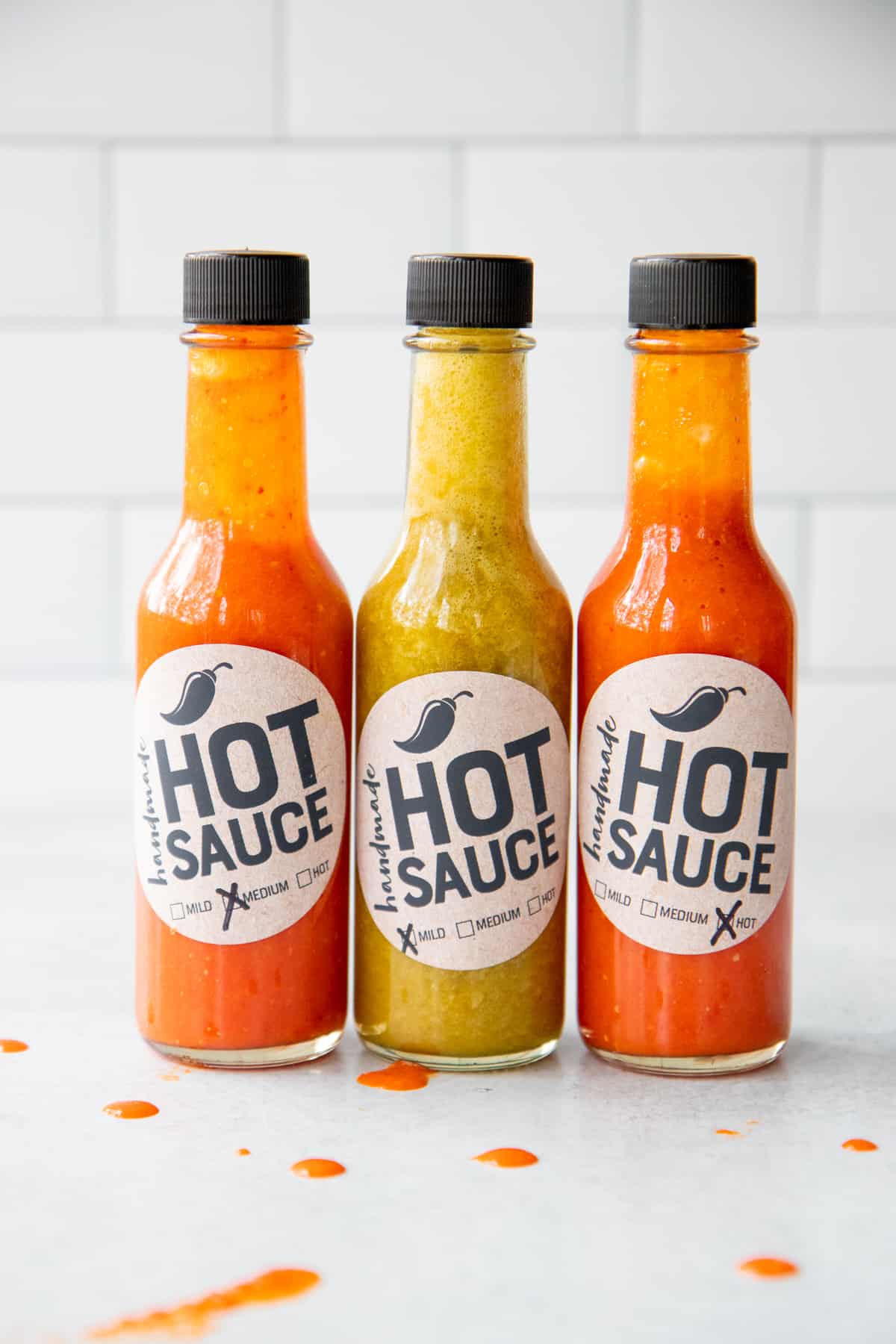
🔍 Recipe At-A-Glance: Homemade Hot Sauce
- ⏰ Prep Time: 10 minutes
- 🗓️ Fermentation Time: 5 days (or skip this using my quick cook version)
- 🌶️ Flavor Options: Anywhere from mild to super spicy
- 🎁 Good For: Everyday eating, awesome gifts, stocking stuffers, host or hostess gifts, teacher gifts, preserving your harvest, selling at farmer's markets
- 🧡 Difficulty: One of the easier fermentation projects out there, or make it easy-as-can be using the quick-cook option

"This might seem melodramatic, but this recipe kinda changed my life. On a whim I looked online for a hot sauce recipe, and I happened upon this one. I'm so glad I did! I absolutely encourage everyone to try the fermented version."
- JOEL -
Summarize and Save this Recipe Using:
Jump to:
- 🔍 Recipe At-A-Glance: Homemade Hot Sauce
- 🧡 Why You'll Love This Recipe
- 🌶️ The Ingredients You Need
- 🔁 Heat Variations
- 🫙 The Supplies You Need
- 📷 How to Make Hot Sauce (Fermented Version)
- 📷 How to Make Hot Sauce (Quick-Cook Version)
- ❄️ Storage and Preservation Directions
- 📥 Download the Free Labels
- 🙋🏻♀️ Homemade Hot Sauce FAQs
- 👩🏻🍳 My Expert Tips & Tricks
- 🍶More Fermentation Recipes
- 📖 Recipe
- 💬 Reviews
🧡 Why You'll Love This Recipe
I use this exact recipe to make a big batch of customized hot sauce every single summer! I've fine-tuned this recipe and method over almost a decade, so you know it'll turn out great when you try it.
Here's why you'll love this recipe:
- Shockingly simple: It's so easy to make homemade hot sauce! I promise you can do this.
- Choose your own adventure: I include both a traditional fermented and a quick-cook version of hot sauce, so you can choose your own adventure when it comes to hot sauce creation.
- Infinitely customizable: No matter if you like it super mild or tears-in-your-eyes spicy, you can make your hot sauce your own.
- So useful: Put it on pumpkin enchiladas, my taco chili recipe, or my simple chicken quesadillas recipe. The possibiliites are endless!
- A recipe you can trust: Go ahead and read the reviews down below!
🌶️ The Ingredients You Need
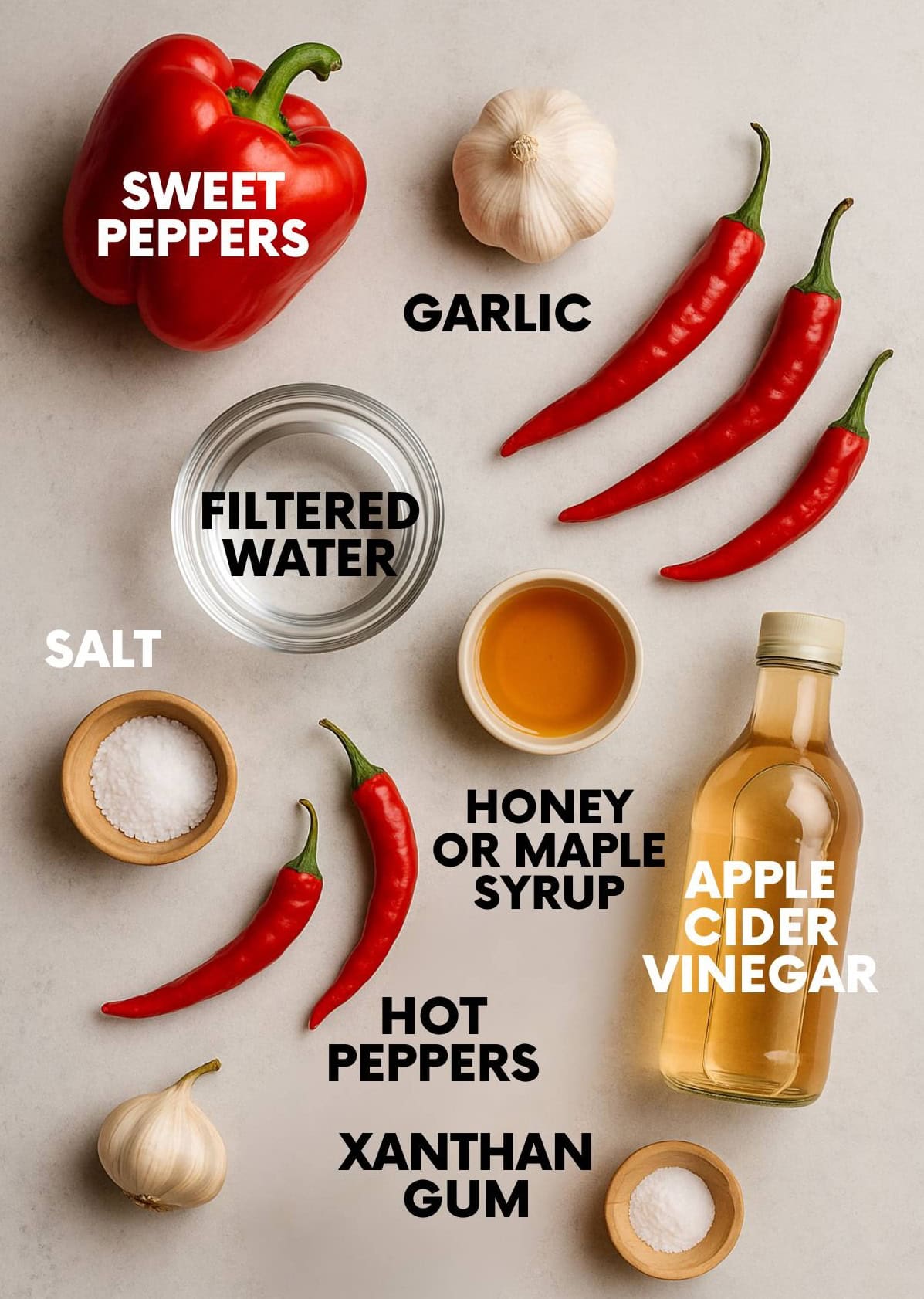
- Peppers: Jalapeños, reapers, Thai chilies, habanero, bell, cayenne, ghost peppers, serranos, OH MY. Which peppers you use really depends on your personal heat tolerance and the flavor profile you're looking for.
- Water: I recommend filtered water (especially if you are following our fermentation version) to make sure your flavor is crisp as possible.
- Xanthan gum (optional, but recommended): This emulsifier helps keep your hot sauce from separating. You'll have to give your hot sauce a good shake before using each time if you don't include it.
Make sure to check the recipe card below for the full ingredients list, along with quantities and my expert tips and tricks.
🔁 Heat Variations
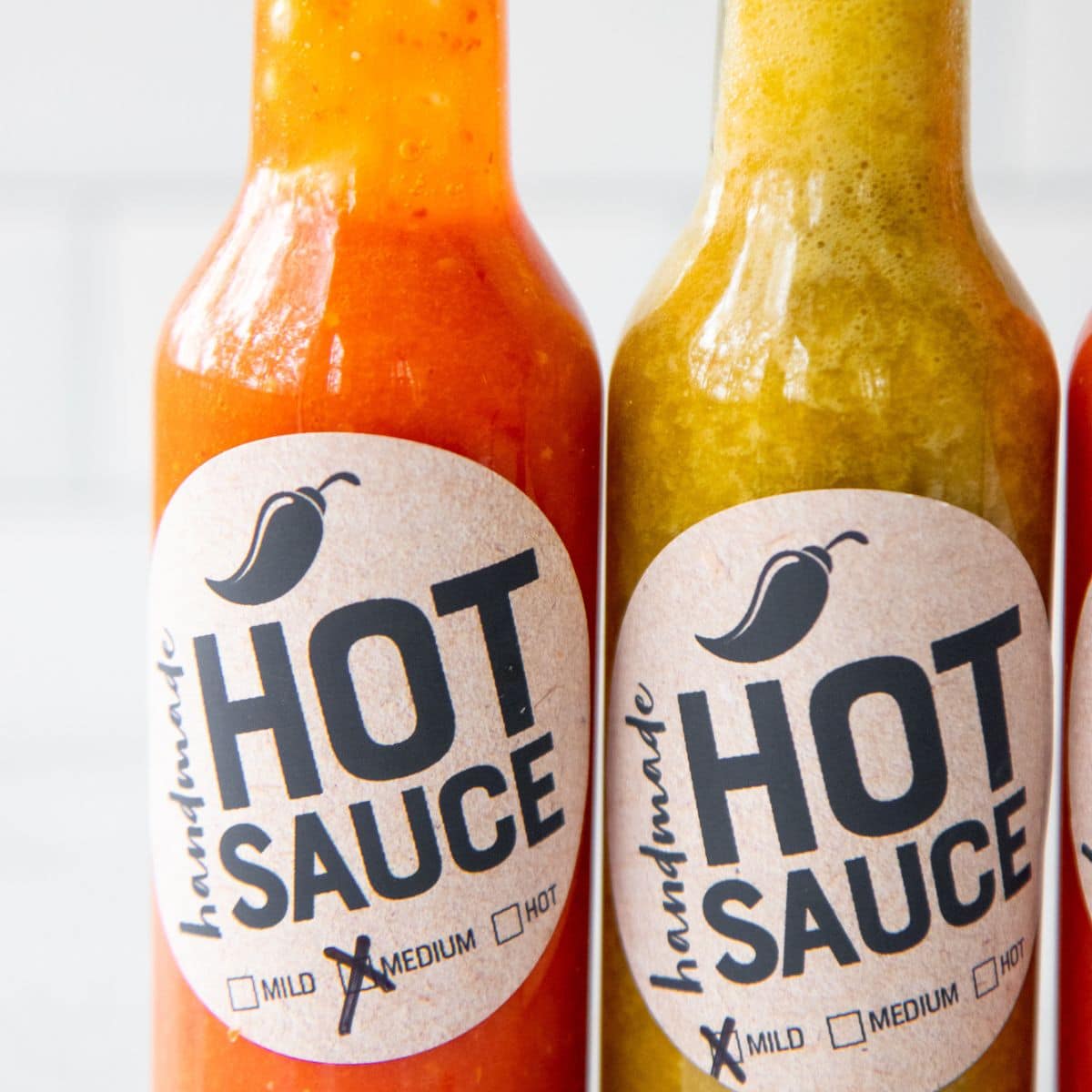
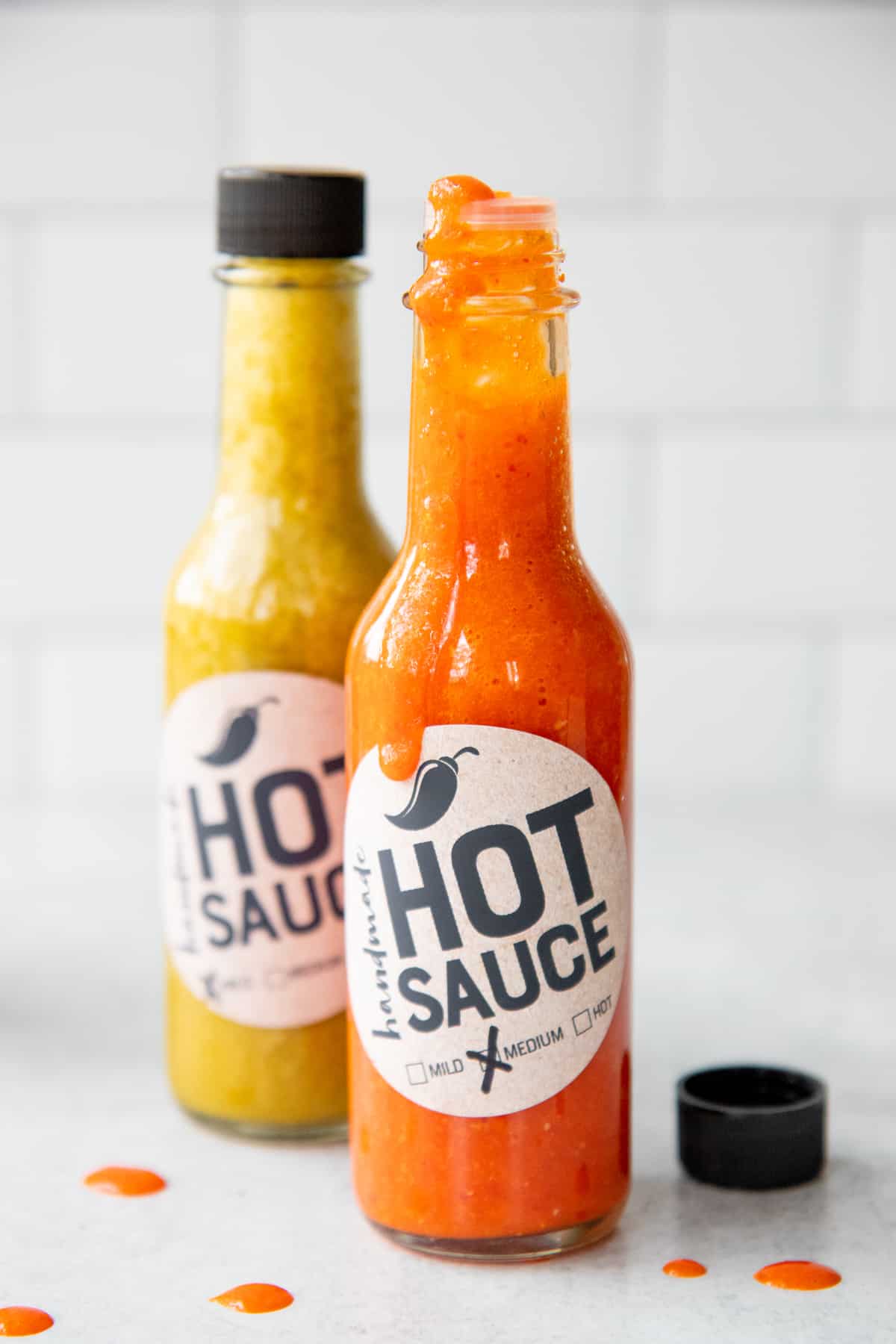
The two hot sauces in the photos here were made with these mixes:
- Red Medium Hot Sauce: Red bell peppers, red cayenne peppers, and red jalapeño peppers (we let jalapeños ripen until they were red)
- Green Mild Hot Sauce: Green bell peppers, green jalapeños, and poblanos
Whatever you choose, remember that you can always add more spice in, but you can never take it out once it's been blended.
I tend to like a milder hot sauce, so I start with a 3:1 ratio of sweet peppers to hot peppers. When using a milder hot pepper, like jalapeño, I cheat to more like 2:1 or 1:1. Some folks use nothing but hot peppers-so it really is up to you to pick your poison here.
🫙 The Supplies You Need
You probably have all the supplies on hand to make this recipe, but if you want a few special items to make the project easier, here's what to grab:
- Fermentation weights and lids: If you want to make the fermented version of this recipe, some fermentation weights and lids make the process much easier.
- Wide mouth canning jars: To go with your fermenting weights and lids.
- Hot sauce bottles: You can put your hot sauce into any sealed container, but these hot sauce bottles are perfect for gifting.
📷 How to Make Hot Sauce (Fermented Version)
If you've ever made homemade sauerkraut, you already know the process we're using to ferment this hot sauce.
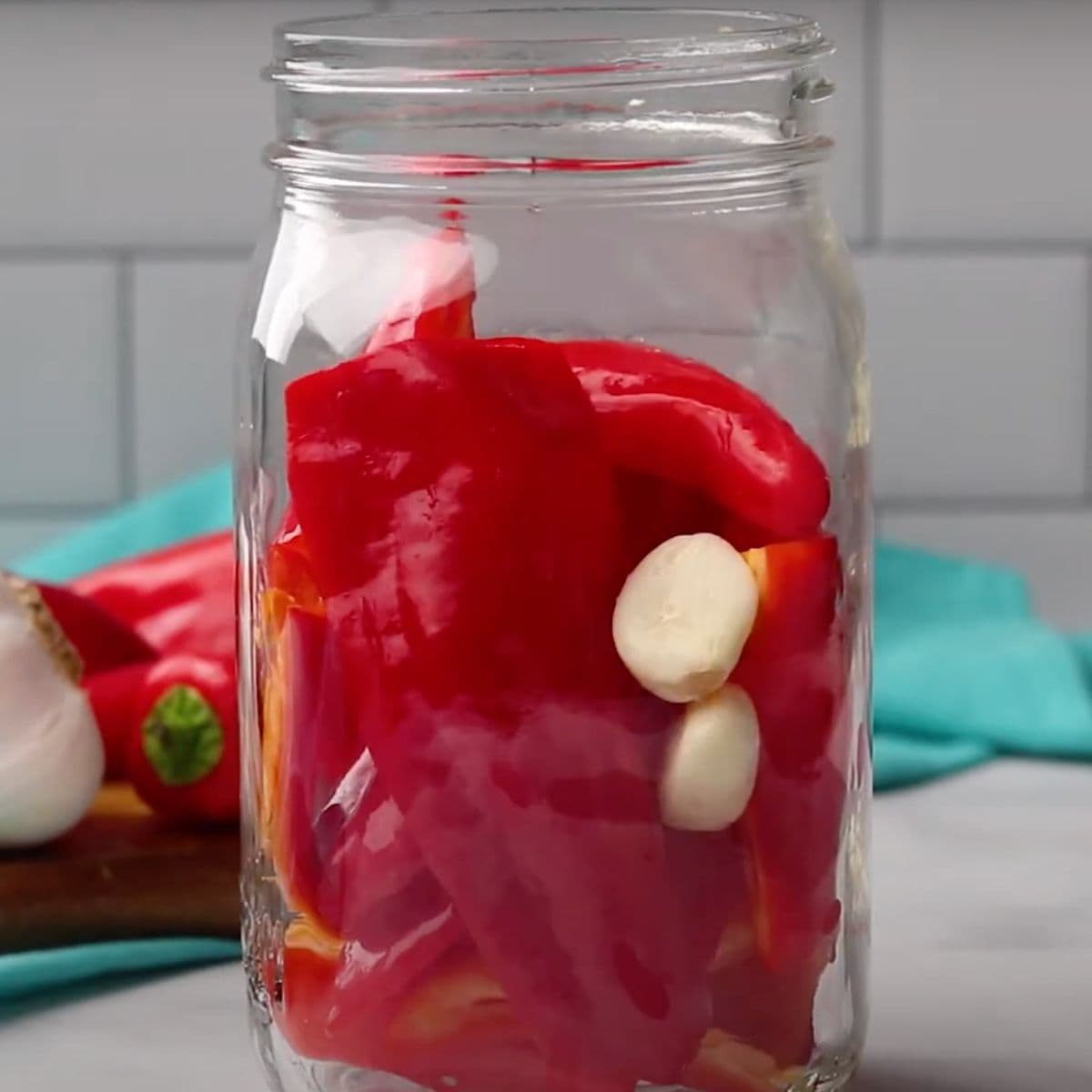
Step 1: Combine peppers and garlic in a wide-mouth canning jar.
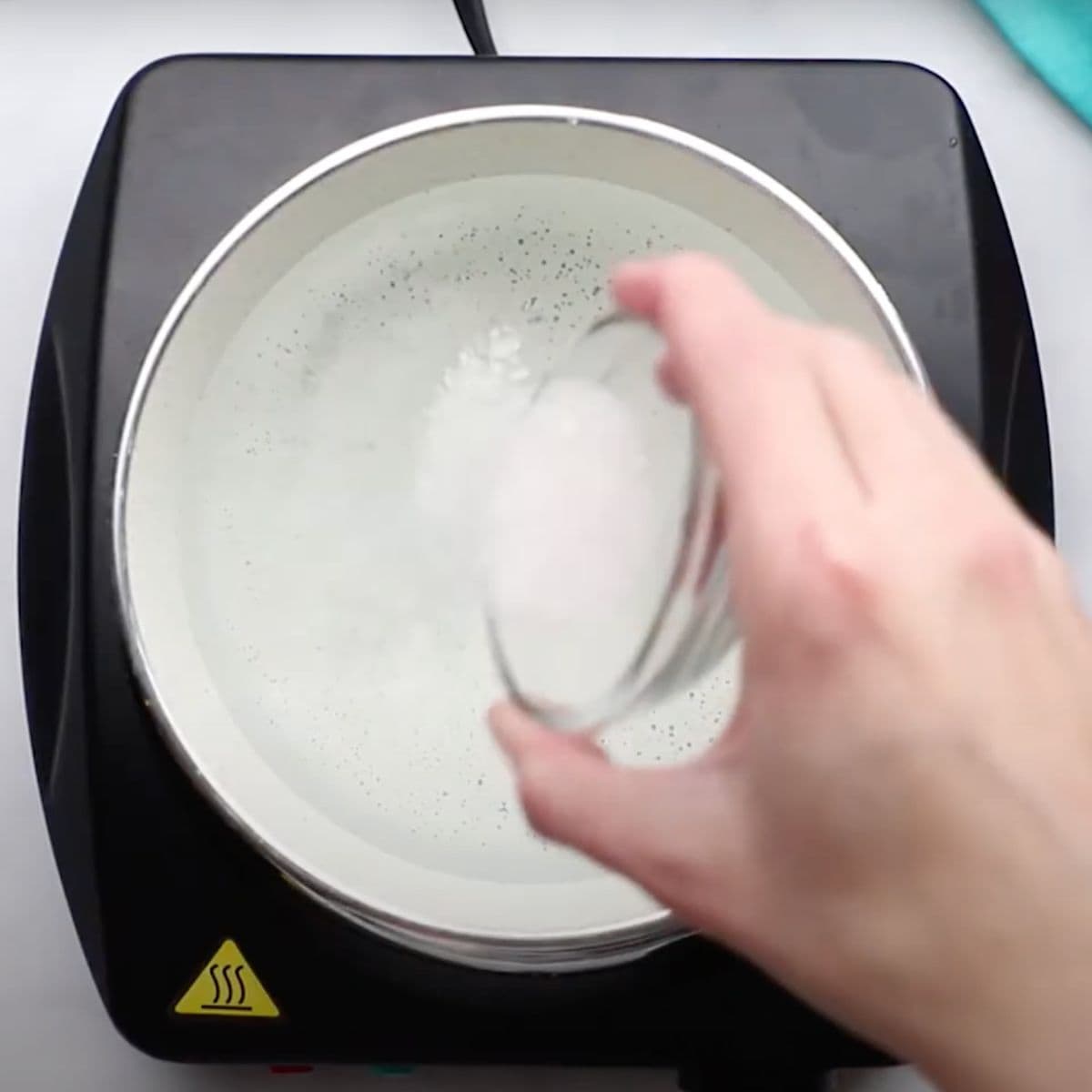
Step 2: Make the brine by combining the water and salt in a saucepan and heating until salt is melted. Let cool.
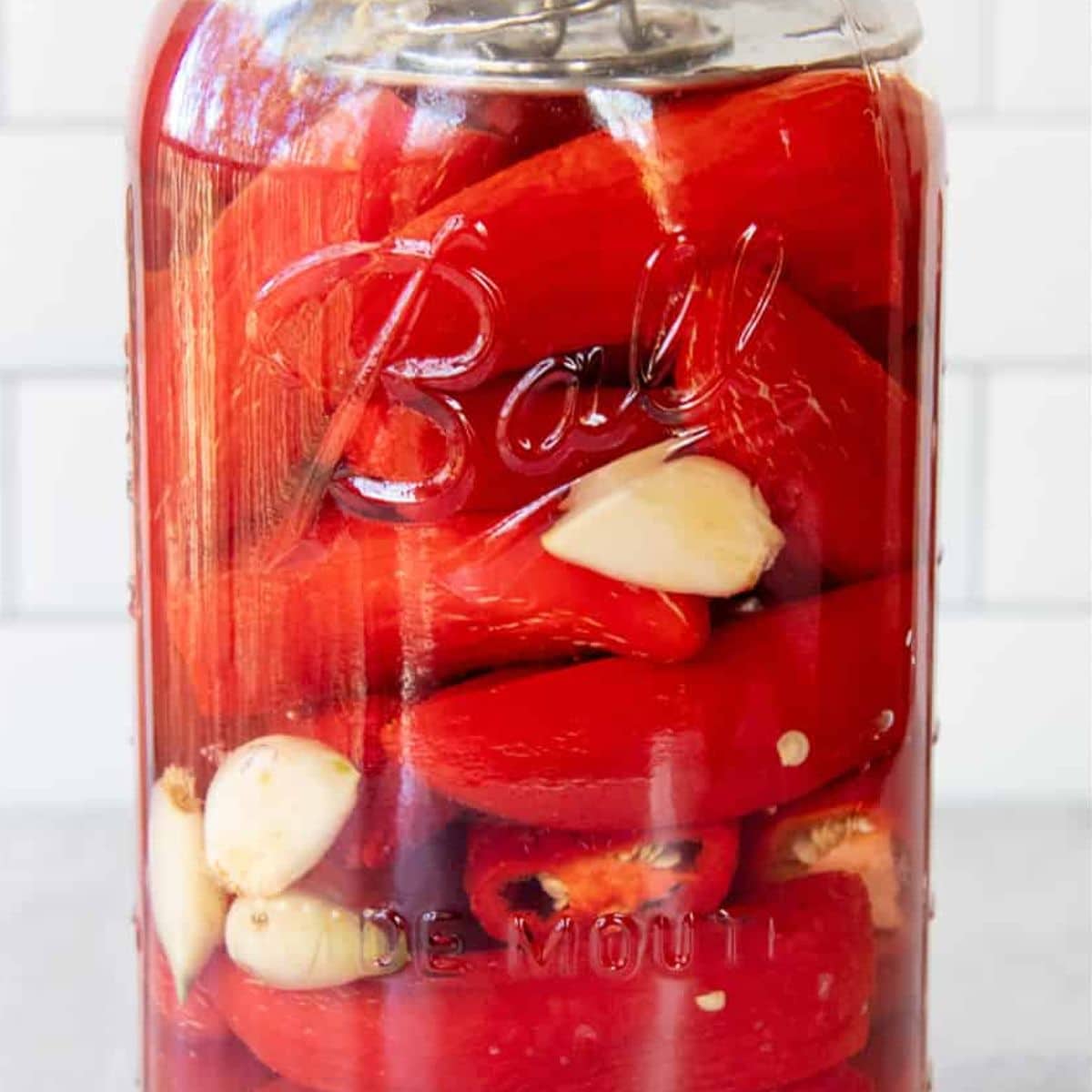
Step 3: Cover the pepper and garlic with the brine, fit with a fermentation weight and lid, and let ferment out of direct sunlight for 5-7 days.
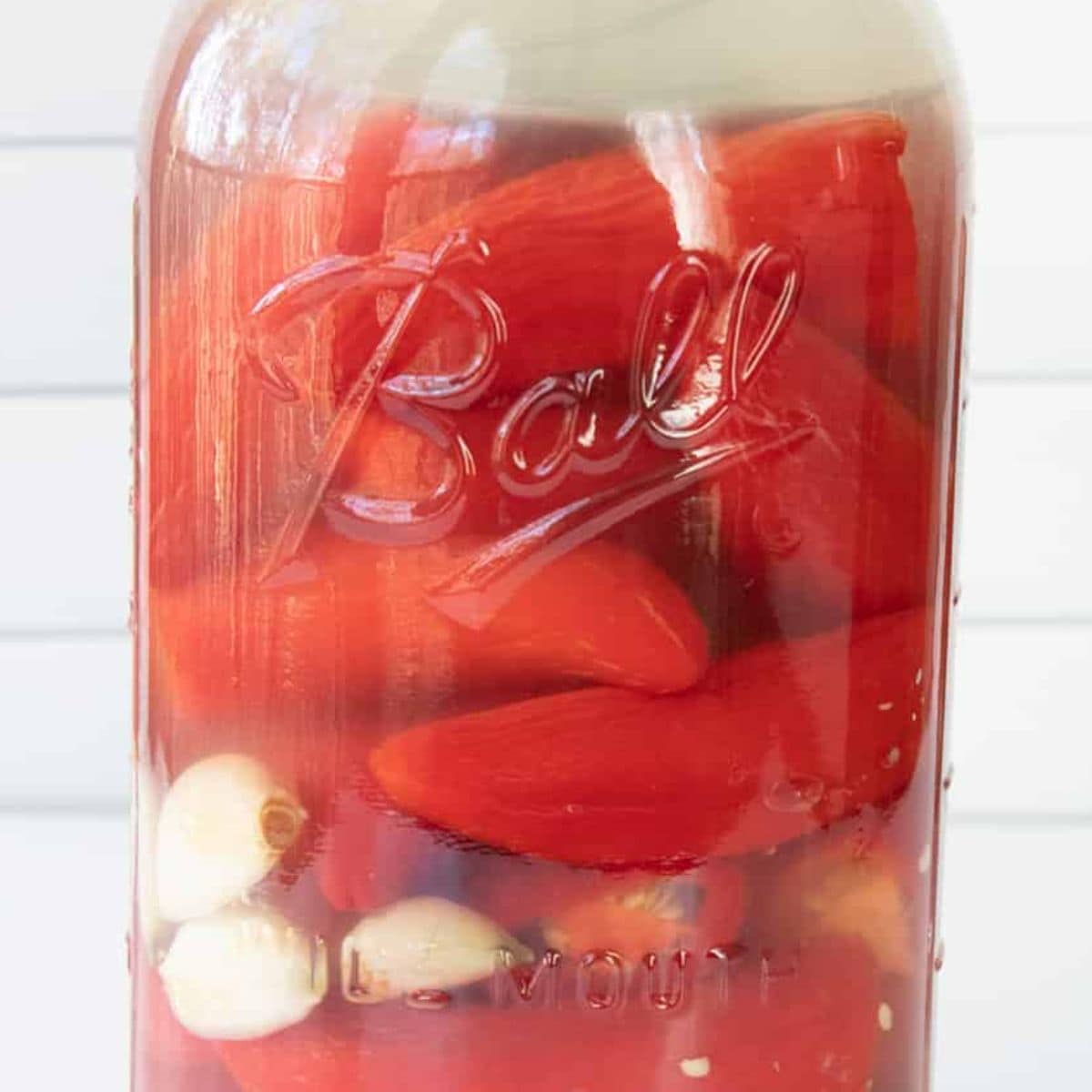
Step 4: The brine will look cloudy when it's ready-this means the fermentation is working!
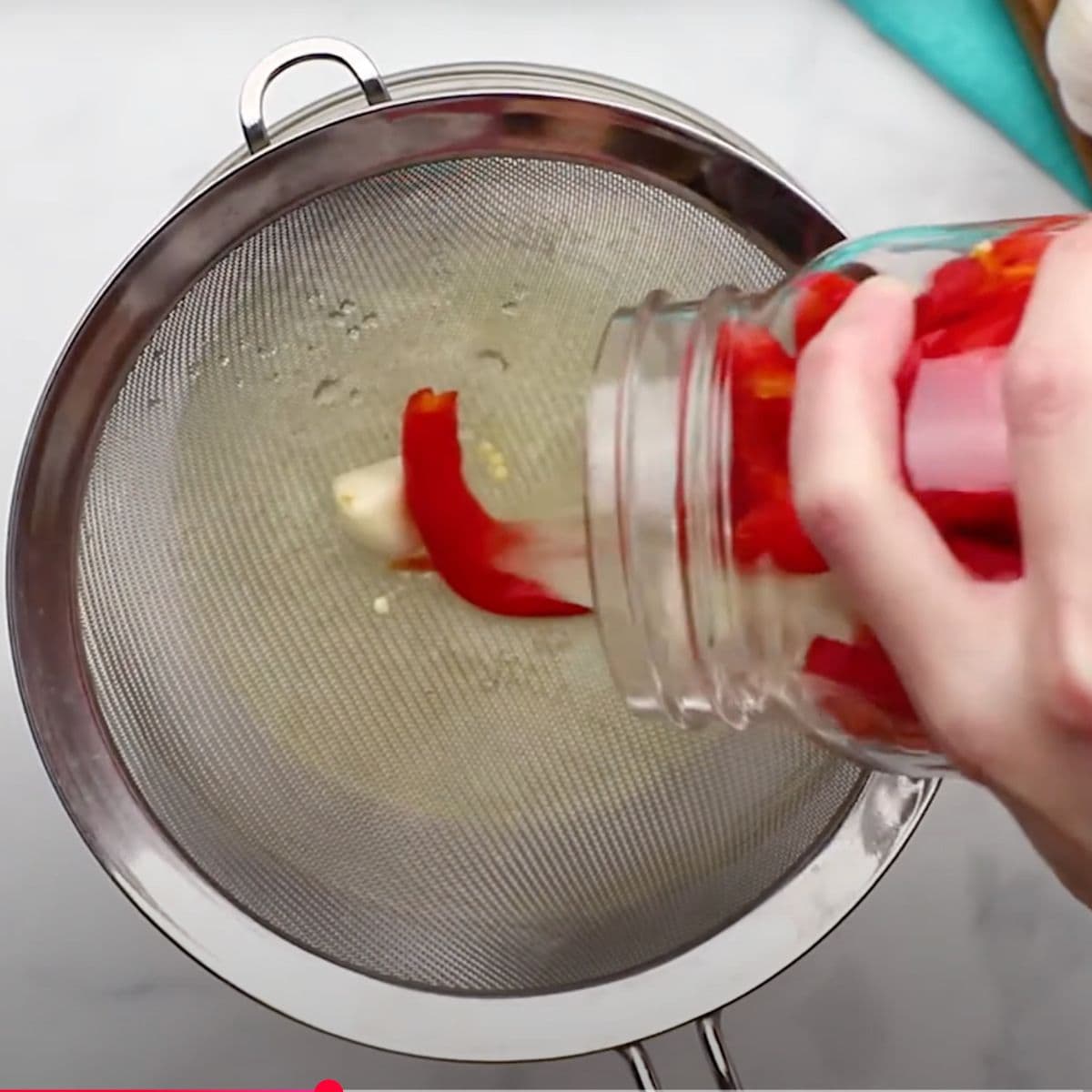
Step 5: Drain the peppers, reserving the brine.
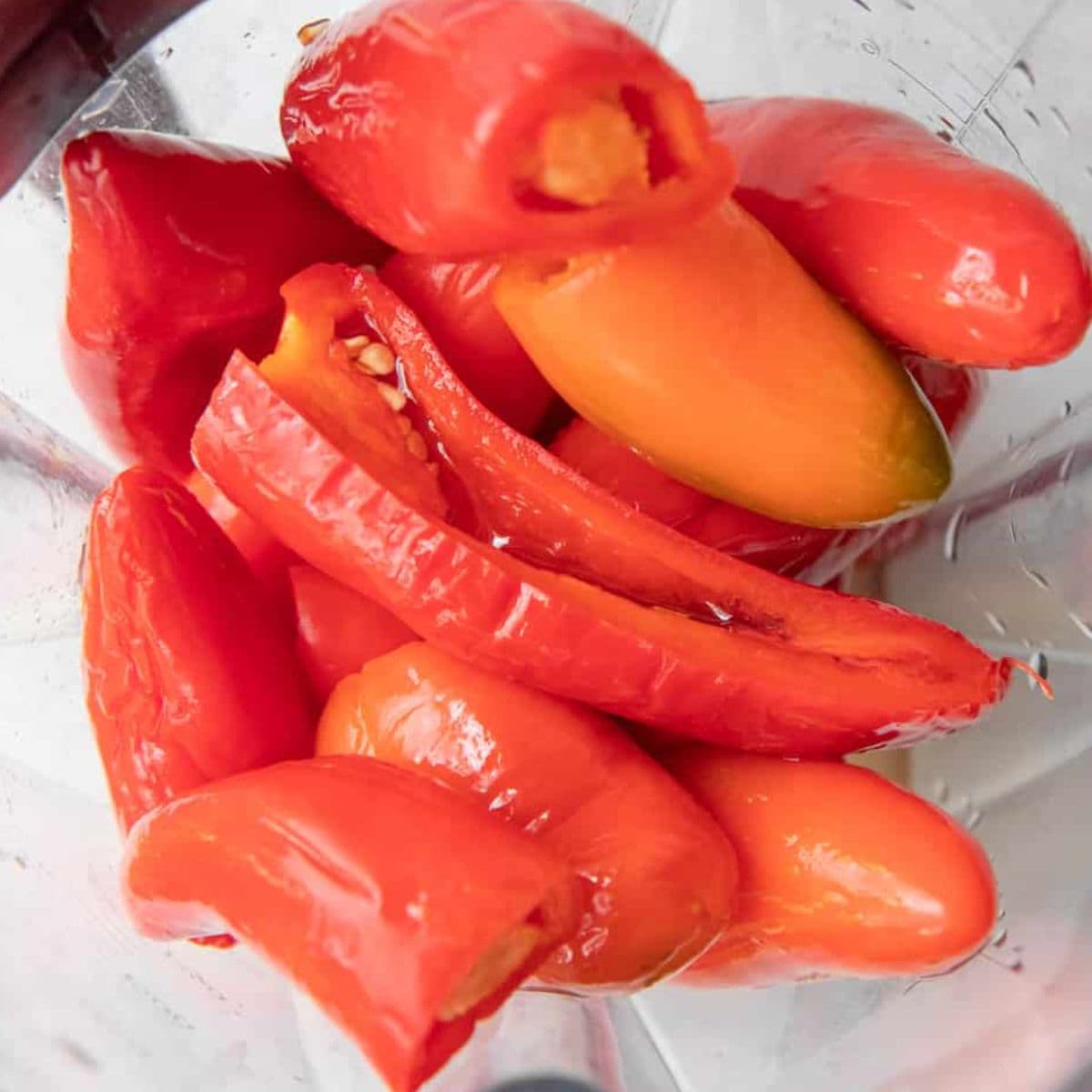
Step 6: Combine the peppers and garlic, vinegar, honey or maple syrup, and 1 cup of brine in a blender.
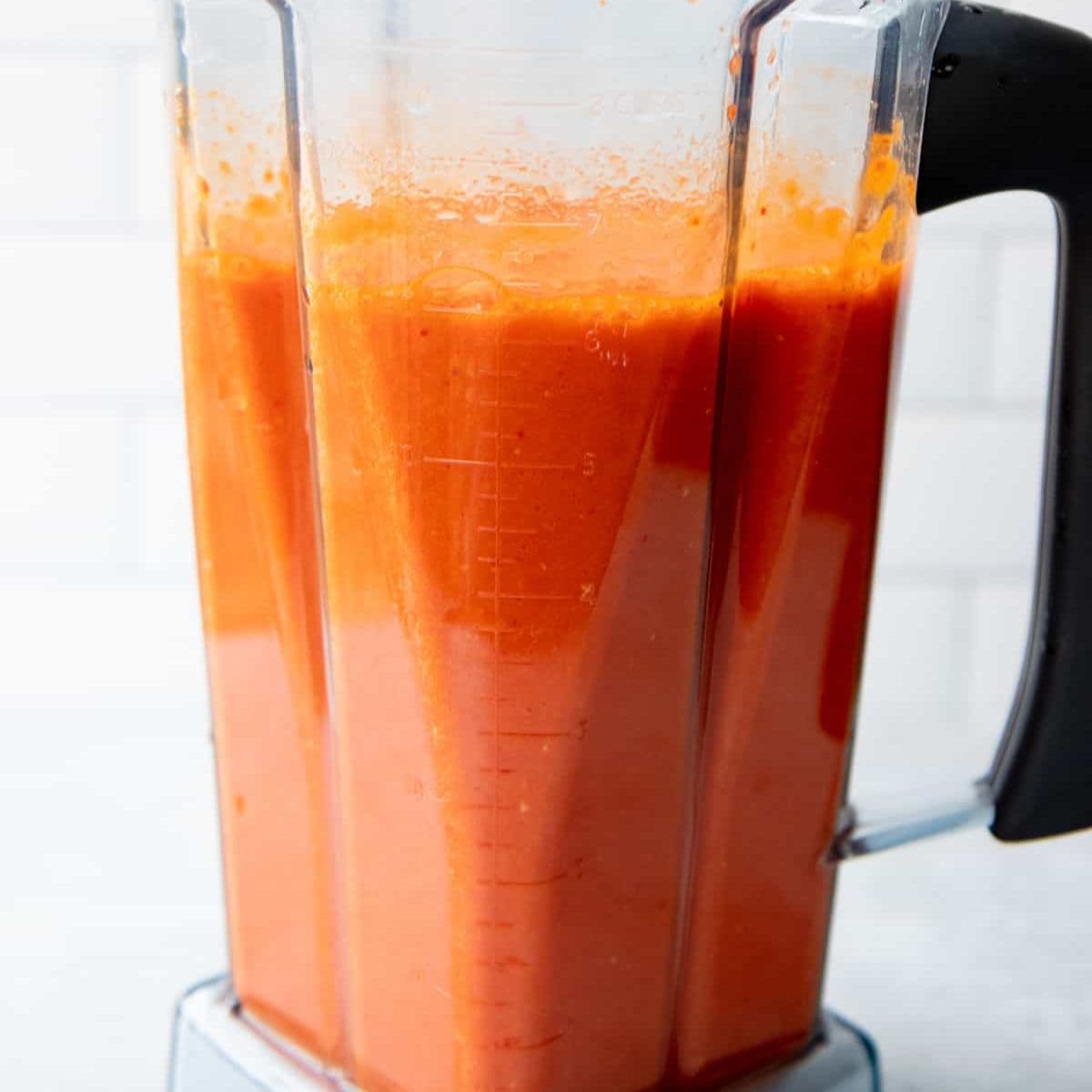
Step 7: Blend until silky smooth, adding in additional brine to thin out if necessary. If you using the xanthan gum, sprinkle it in while the blender is running and blend for an additional minute.
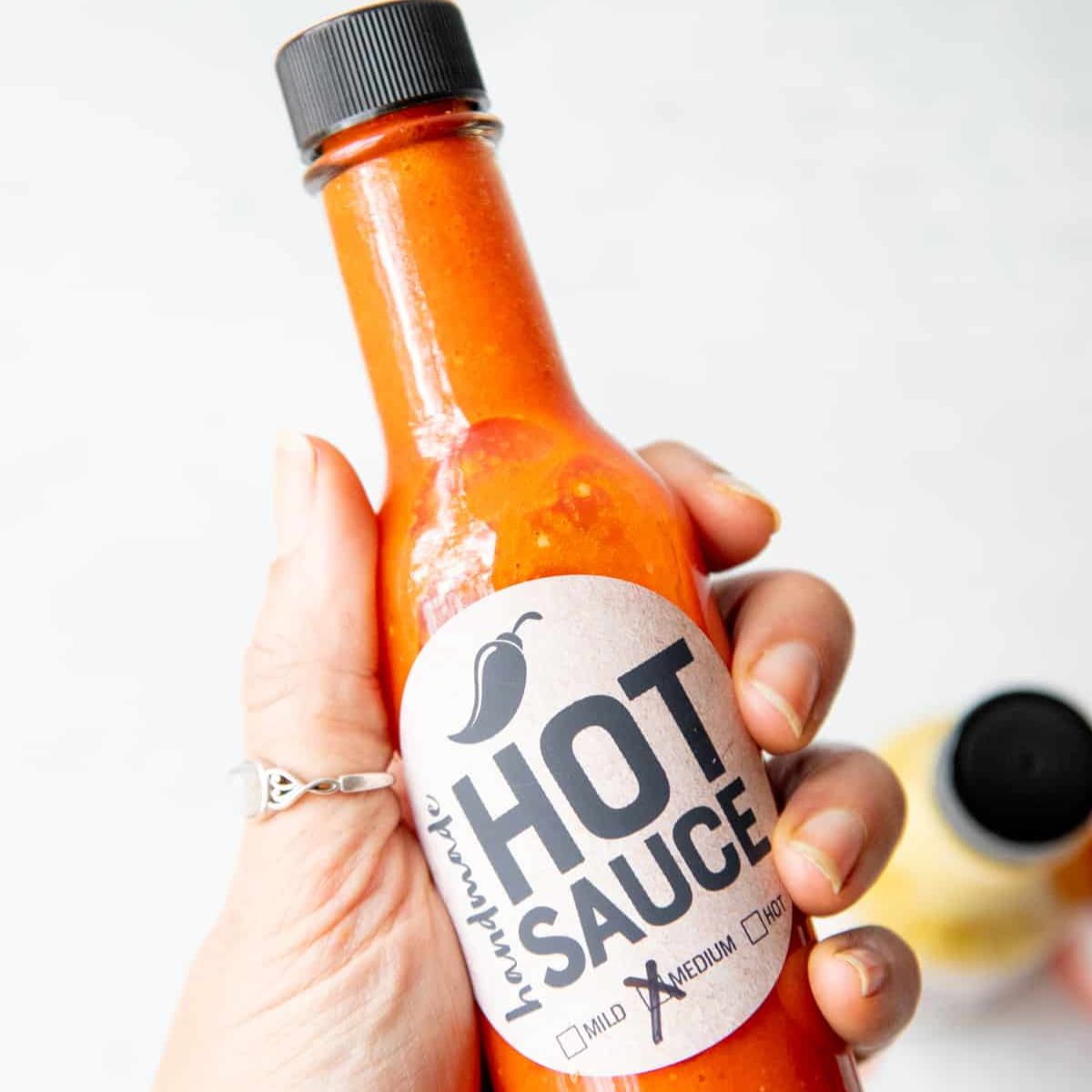
Step 8: Bottle and label!
📷 How to Make Hot Sauce (Quick-Cook Version)
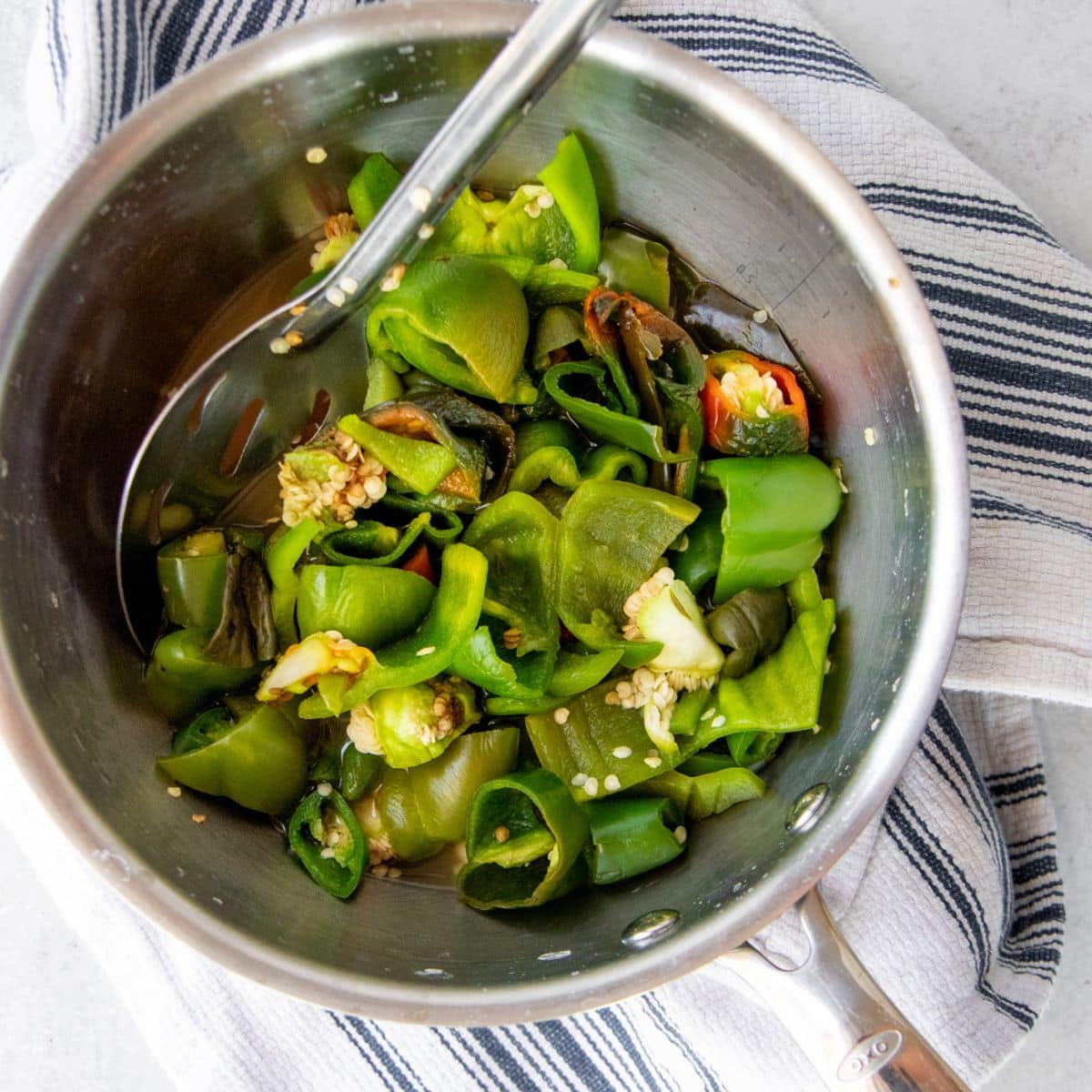
Step 1: Combine the peppers, garlic, water, salt, vinegar, and honey or maple syrup in a medium pan. Bring to a boil and simmer until the peppers and garlic have softened.
Step 2: Pour mixture into a blender and blend until very smooth. While the blender is running, sprinkle in the xanthan gum and blend for an additional minute.
Want to save this recipe?
❄️ Storage and Preservation Directions
- Fermented version: thanks to the beneficial bacteira, it will last 3+ months in the fridge easily.
- Quick cook version: lasts in the fridge for 2-3 weeks
- Freezing: Hot sauce freezes great for even longer preservation!
- Canning: If you choose to can hot sauce to extend the shelf life, use a hot sauce recipe that has been tested and proven safe for canning instead of my recipe here.
- Labeling: Make sure to label your hot sauce well so you know exactly what it is, what spice level it is, and when it was made. I have free labels you can download by filling out the form below.
📥 Download the Free Labels
I've made you some free labels for your hot sauce bottles that you can print off at home. Just fill out the form below to get them delivered right to your inbox.
🙋🏻♀️ Homemade Hot Sauce FAQs
You can use either white distilled vinegar or apple cider vinegar here. I prefer the slight fruity flavor of apple cider!
If you don't want to make fermented hot sauce, you can quick cook the ingredients on the stove and bottle them (and enjoy your sauce the same day).
👩🏻🍳 My Expert Tips & Tricks
- No brown hot sauce: Mix and match different types of peppers to get the flavors and heat levels you desire, but make sure you stick to the same color family to avoid a yucky brown hot sauce.
- Stay safe: When working with hot peppers, it's important to: wear gloves while handling and cutting, wash hands extremely well after handling, wear goggles, and work in a well-ventilated area
- Label your bottles: Fill out the form in the post to get my free hot sauce labels. These are designed to print on Avery 2 ½" round water-resistant labels.
- The sauce thickens: The hot sauce will thicken quite a bit in the fridge, so keep that in mind as you decide on the consistency while blending.
- Got foam? Your hot sauce may be foamy when you're finished blending. If so, let the hot sauce rest for 15-20 minutes, then scrape off any foam before bottling.
- No fermentation weights? You'll need to use some sort of weight to keep the peppers submerged under the brine to prevent mold growth. A budget optional is to fill a zip-top sandwich bag with water and submerge it in the top of the jar and secure cheesecloth or a thin piece of cotton to the top of the jar with a rubber band.
🍶More Fermentation Recipes

If you tried this Homemade Hot Sauce or any other recipe on my blog, please leave a 🌟 star rating and let me know how it went in the comments!
📖 Recipe
Homemade Hot Sauce (Fermented or Quick Cook)
Ingredients
- 1 ½ pounds peppers of your choosing a mix of sweet peppers and hot peppers, tops/stems removed, halved
- 6 cloves garlic peeled
- 4 cups filtered water
- 4 teaspoons sea salt
- ⅓ cup apple cider vinegar
- 1 tablespoon honey or maple syrup optional
- ½ teaspoon xanthan gum optional (see notes)
Instructions
For the Fermented Version
- Place the peppers and garlic in a clean wide-mouth quart canning jar. Set aside.
- To make the brine, heat the filtered water and sea salt in a medium saucepan until the salt has dissolved completely. Let cool to room temperature.
- Pour the brine over the peppers and garlic, completely submerging them. If you run out of brine, you can make more by mixing 1 cup of warm filtered water with 1 teaspoon of sea salt.
- Fit the jar with a fermentation lid or cheesecloth secured with a rubber band (see notes on weighing down the peppers if using cheesecloth). Place in a warm, dark spot for 5-7 days, or until the brine looks cloudy and small bubbles begin to appear when you tap the side of the jar. Make sure the peppers stay submerged under the brine during the entire fermentation process to prevent mold-growth.
- When the fermentation time is up, strain the brine, reserving it. Place the fermented peppers and garlic in a blender, and add in 1 cup of the brine, plus the apple cider vinegar, and honey or maple syrup, if using. Blend until completely smooth, adding in additional brine to reach the desired thickness. The hot sauce will thicken in the fridge.
- While the blender is running, sprinkle in the xanthan gum, if using, and blend for an additional minute.
- Transfer to a bottle and store in the fridge for 3-6 months.
For the Quick Cooked Version
- Combine the peppers, garlic, 2 cups of water, 2 teaspoons of sea salt, apple cider vinegar, and honey or maple syrup, if using, in a medium pan over medium-high heat. Bring to a boil, reduce heat, and simmer for 10-15 minutes, or until the peppers and garlic have softened.
- Pour mixture into a blender (making sure to leave the cover vent open, but covered with a kitchen towel) and blend until very smooth.
- While the blender is running, sprinkle in the xanthan gum, if using, and blend for an additional minute.
- Transfer mixture to a squeeze bottle and store in the fridge for 2-3 weeks.
Video
Notes
- If you choose to use cheesecloth during fermentation, you'll need to use some sort of weight to keep the peppers submerged under the brine to prevent mold growth. You can purchase fermentation weights to do this, or fill a zip-top sandwich bag with water and submerge it in the top of the jar.
- In this recipe, xanthan gum works as an emulsifier, stabilizer, and thickener. If you choose not to use it, your hot sauce will separate in the fridge. Just give it a good shake each time you go to use it.
- The hot sauce will thicken considerably in the fridge, so keep that in mind as you decide on the consistency while blending.
- Depending on the power of your blender, your hot sauce may be foamy when you're finished blending. If so, let the hot sauce rest for 15-20 minutes, then scrape off any foam before bottling.

I don't know anyone (besides me) who uses the quick cook method. Everyone I know who makes hot sauce uses the fermentation method. I can't figure out why, but if it works for them that's what they should do. For ingredients I use peppers and vinegar. That's it. After the sauce cools after cooking I transfer it to mason jars and age it in the refrigerator for a minimum of 3 days although there's no time limit. If it's been in there six months or six days you won't be able to tell me the difference. Once I remove it from the refrigerator and transfer it to woozy bottles I store it at room temperature. How long does it last? I'm using some now I made in 2021. And some I make two weeks ago. No one can tell me which bottle was made first.
Hi Daren! We’re so glad to hear that you haven’t had any issues with your hot sauce spoiling or making anyone sick. But our recommendations follow best practices for current food safety standards, which is why we say that both the quick cook and fermented versions should be kept in the fridge!
I freeze my peppers whole for storage because I'm one person and my pepper plants outnumber me. Can I make hot sauce via the fermented method with peppers that have been frozen and then thawed? Does freezing the peppers have a negative impact on the outcome?
We totally understand that! The good news is frozen peppers work just as well as fresh in this recipe. Since it's all getting blended, you won't need to worry about the texture of the peppers after thawing. You'll still want to remove the stems and tops, but you can leave the seeds and let the blender take care of 'em! Please let us know how it turns out for you!
If I was to can this in mason jars outside of the fridge I suppose I'd have to bring it to a boil after the fermentation so it wouldn't be sitting on the shelf continuing to ferment?
Hi Ty! We have a section about this in the post, but I'm copying it here for you to make it easier to find: "If you’d like to preserve your hot sauce for longer storage, you can either freeze it or process it in a waterbath canner (if you choose to can hot sauce, use a recipe that has been tested and proven safe for canning instead of ours). A caveat here: the beneficial bacteria created in the fermented version will be killed off by the high heat from the canning process. It’ll still be delicious, it just won’t add any probiotics into your diet."
Can I add onions?
As long as whatever you add stays submerged in the brine, you can experiment with adding other flavorings. We've even had some folks in the comments mention adding blueberries or other fruits to this mix! If you give it a go, please let us know how it turns out for you!
What is the shelf life if you do the fermentation process?
Hi Kayla! Both the quick cooked and fermented versions need to be refrigerated, but the fermented version will be good for much longer. It will easily last between 3 and 6 months in the fridge!
Hi! What about seeds? Remove them or just blend 'em up with the peppers and garlic?
Hi Michael! We just blend 'em to save a step!
Okay to start with dried peppers?
Hi Kay! We haven’t tried making this with dried peppers before. We’re not sure if it will work the same way. If you give it a try, please let us know how it works for you!
I didn't read the recipe right, I fermented the peppers without salt... is it salvageable? It smells great...
Hi Joanne! We wouldn't risk it. We'd rather be safe than sorry, so when in doubt, throw it out!
Thank you for this recipe! What's the refrigerator life for the quick cook version? Does "store for 2 weeks" mean it's shelf life, or should I be letting it sit for 2 weeks before use?
Hi Mo! That's about how long it will keep in the fridge—so you'll want to use it up in that time!
Can you use another type of salt other than sea salt? Like kosher salt or pink salt?
Hi Lindsey! You can definitely use another type of salt if that's what you have on hand. Kosher and pink salt should both be fine in this recipe. If you're making the fermented version, you'll just want to avoid iodized salt!
The yield for this recipe says about two quarts. How is that possible using the single quart jar listed in the recipe with 4 cups of water and 1/3 cup of vinegar?
Hi Jim! The 1.5 pounds of peppers displace a lot of liquid! You'll likely need to two quart jars to hold them and all the brine. But these amounts are approximate and will depend on the mix of peppers you use, how you cut them, etc. So you might end up with more or less depending on exactly what mix of peppers you use.
Hello, trying this recipe (chesscloth and bag with water), but after 7 days the brine is cloudy but still no bubbles. Any way to save it?
Hi Mieke! Cloudy is good! This isn't the type of ferment that will bubble vigorously. If you tap the side of your jar, you'll likely see some tiny bubbles rise to the top. But the main thing you're looking for is that it got cloudy. You can see the difference in our photo above that shows Day 1 alongside Day 7. If yours is looking like that, you should be good to go!
Hi! This might be a dumb question, but 1.5 pounds of peppers....is that weight before or after stems removed? And if using bell peppers, do you get rid of excess inner flesh/seeds and how does that come in to the weight?
Thanks!
Hi Chelsea! Definitely NOT a dumb question! That weight is before the tops and stems are removed. Since everything goes into the blender, we left the seeds in to save ourselves a step. But you can definitely remove them if you prefer! Some folks took them out at the beginning (when removing the tops/stems), and others ran the puree through a fine mesh strainer to catch anything the blender didn’t get. Both work well if you don’t want to worry about seeds!
Hi!
I started the fermentation yesterday, and the water already looks a bit cloudy and there are some bubbles... Is this okay/ normal?
Hi Megan! That sounds like what you want, and it's totally normal for it to happen at a faster or slower rate than we give in the post because it's very dependent on the temperature in the place you're fermenting it. You can definitely keep fermenting it for another day or two (or more!) to get the flavor and probiotics you want. Just know that the longer it ferments, the stronger the fermented flavors will be!
I tried the fermented version last year and got super sick a few weeks after making it. I'm sure it was something I did, but do you have any idea what it might have been? I want to try fermenting again but I'm not sure I can stomach the risk of going through that sickness again. If you have any suggestions please let me know! Thanks for sharing the recipe Cassie.
Hi Andrew! Without more info, it's really hard for us to determine what, if anything, went wrong. We're sorry to hear that you were sick, but are you you sure the hot sauce was the problem? If you think that's the case, could you tell us more about what you did? Were you keeping it in the fridge? Were there any indications that something was off—visible mold, off smells, etc.? The more info you give us, the better we can help you troubleshoot! Feel free to drop us an email if that's easier.
Fine recipe, but does ANYONE have a 'Small-batch" recipe ? I've googled and searched and searched and type in 'small batch pepper sauce reciple' and all I get are 1 pound, 2, pound, one even had 5 pounds. A lot of us grow several types and don't have just one specific type to have pounds and pounds of the same type of pepper. I just want to make 3 or 4 jars with peppers from 2 plants. Does anyone know how to make hot sauce with a small batch? Sure can't find them on the web
Hi Don! You can make a small batch of this, just as long as you can be sure the peppers stay under the brine while fermenting. Once the fermentation is finished, just add less of the reserved brine into the blender to get the consistency you want. Let us know how it turns out if you give it a go!
I'm eager to try the fermented recipe. I've made pickles before and it was fun. We have hot sauce bottles with tops that include the meltable seals (sealed with a hair dryer). Does your recipe have a shelf life without being refrigerated? We give pickles, jams, salsas, etc. as gift baskets and would love to include hot sauce in that basket.
Hi Anne! Both the quick-cooked and fermented hot sauces made using our recipe need to be refrigerated. If you'd like to find something shelf-stable, you'll need to look for a recipe developed and tested for canning safety. Unfortunately, that's not this one! That said, these bottles will do okay for a short time out of the fridge if you'd like to gift them. We usually recommend keeping them in the fridge until your gift exchange then letting your recipients know to get it back into the fridge as soon as they can!
Is there anyway to make this shelf stable.
Hi Barbara! The best way to preserve this recipe for long-term storage is to freeze it. Shelf-stable hot sauce is possible at home if you process it in a waterbath canner. But you'll need to seek out a recipe that's been tested and proven safe for canning. Unfortunately, our recipe has not been tested for that, which is why we recommend storing it in the fridge or the freezer. The other thing to consider is that the beneficial bacteria created in the fermented version will be killed off by the high heat from the canning process. It will still be delicious, but you'll miss out on the added benefit of probiotics the fermented version offers.
Hi there!
I dehydrated my peppers. Can I use the ferment method with them?
Thanks
Mark
Hi Mark! We haven't tried our fermented hot sauce method with dehydrated peppers before. We're not sure if it will work the same way. If you give it a try, please let us know how it works for you!
Could you add any spices or seasonings such as cumin, turmeric, or coriander? Or would that ruin it or compromise the shelf life?
Hi Brian! Adding dried spices should be fine. It won't change the shelf life in the fridge in any noticeable way. Fresh flavorings like herbs, fruits, etc., would need to be added either before fermenting/cooking or they would change the shelf life. But for the seasonings you mentioned, you should be good to go!