
How to Make Instant Pot Coconut Yogurt
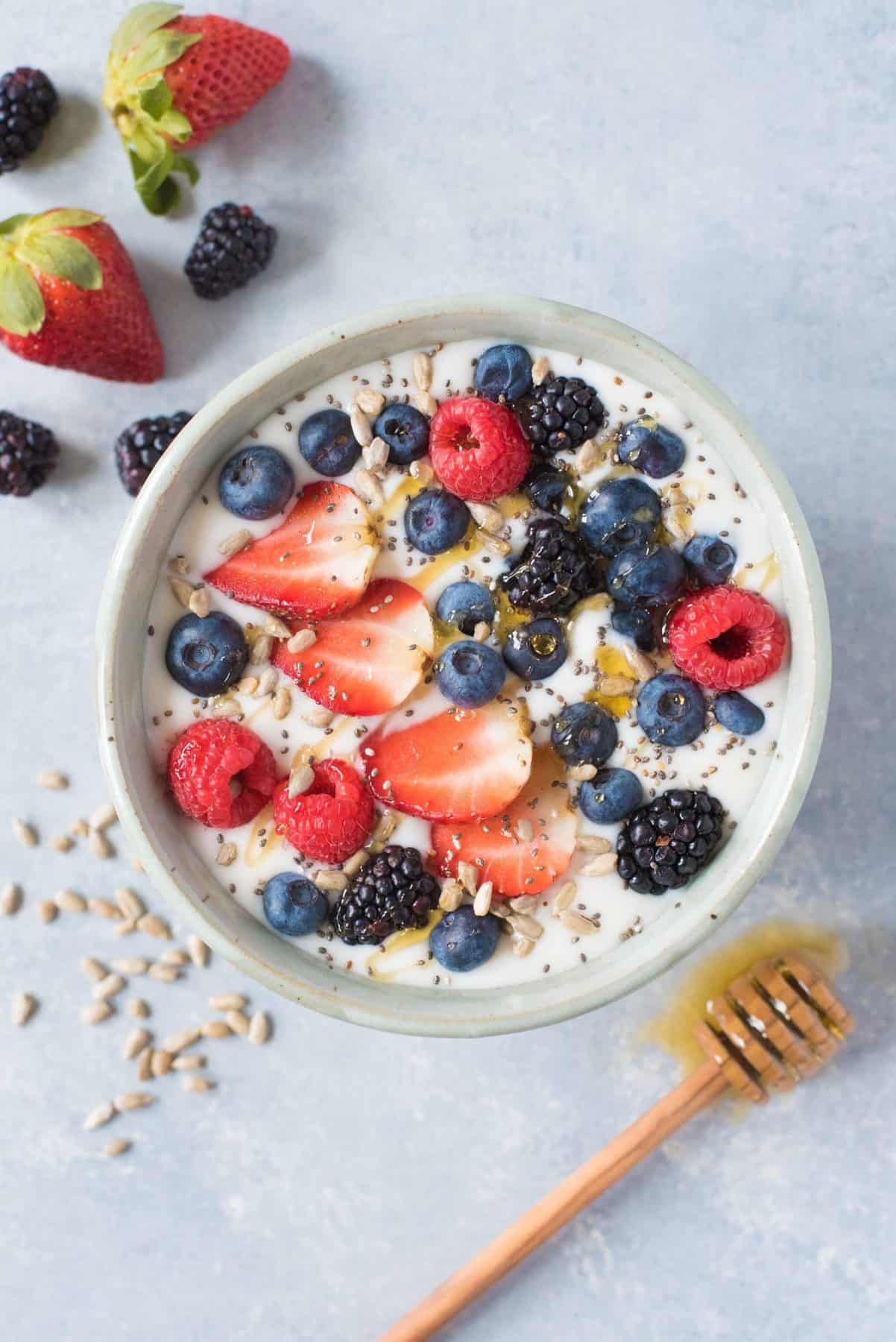
I first started making this dairy-free coconut yogurt back in 2014. When my daughter was born, she had a Milk and Soy Protein Intolerance (MSPI, for short), meaning that even the slightest bit eaten by me would come through my breastmilk and cause her incredible stomach upset. It only lasted six months, but in that time, I discovered that my body functions better without dairy. It was confirmed later when I did my time on the AIP diet to find food intolerance.
That's how I discovered the amazing versatility of cashew cream. And that's when I started making my own dairy-free Instant Pot coconut yogurt. It's such a great AIP breakfast option (or any dairy-free diet).
Why should I make this coconut yogurt recipe?
Making yogurt in the Instant Pot (dairy-free or otherwise) is so incredibly fool-proof. If you've ever been intimidated by making your own yogurt before, the Instant Pot is your answer. It makes it so hands-off and so simple-it's honestly almost easier than just going to the store to buy premade coconut yogurt.
And my gosh, can you save some serious cash by making your own yogurt at home-especially the dairy-free stuff. At our local grocery store, a five-ounce cup of coconut milk yogurt runs about $1.99. You can make an entire quart-32 ounces worth-of Instant Pot coconut yogurt for less than $4. It'd cost you $12.74 to buy that much pre-made! And when you go through as much yogurt as we do, that adds up fast.
Another (huge) added benefit: you can control everything about your yogurt-the thickness, the tanginess, and most importantly to me, the probiotic levels. Most store-bought yogurts are barely fermented at all-some sources say that yogurt from the store can be fermented for as little as one hour! One hour does not get you much healthy bacteria, but you know what does? Using your Instant Pot to ferment for 24 hours or more. Yogurt that is fermented for 24 hours has more healthy probiotics per cup than any over-the-counter probiotic pill-we're talking billions of good guys helping to keep your gut happy! And it's way more delicious than popping a pill.
Are there any drawbacks to making Instant Pot coconut yogurt?
The one caveat with Instant Pot coconut yogurt-it's never going to get as thick as cow's or goat's milk yogurt without some help. That's because coconut milk just doesn't have the lactose and proteins that transform the texture when fermented.
How do I make thick, creamy homemade coconut yogurt?
If you love good thick yogurt like I do, I highly recommend using any or all of these three ways to get there:
- Use the right coconut milk. Full-fat coconut milk from the can (not "Lite" coconut milk or the coconut milk from the refrigerated cartons) is going to give you the thickest, creamiest yogurt. In fact, if you can find straight-up coconut cream (this is what I usually use), you're going to get the best results.
- Go for a long ferment. Yes, coconut milk won't thicken like cow's milk during fermentation, but it will thicken some. The baseline time I recommend to turn your milk into yogurt is eight hours-but that's not going to thicken your yogurt at all. If you set your fermentation time for closer to 24 or even 36 hours, you're going to get a naturally thicker yogurt.
- Use a thickener and chill. This is absolutely optional, but I usually thicken my yogurt using unflavored beef gelatin (I've also had good results using agar agar for a vegan version). I just add enough to give it a little bit of body-and not turn it into yogurt Jello-and then I chill until completely cold.
It might take you a bit of experimentation to figure out the right combo that makes your family happy. But once you land on it, you'll never go back to buying yogurt again!
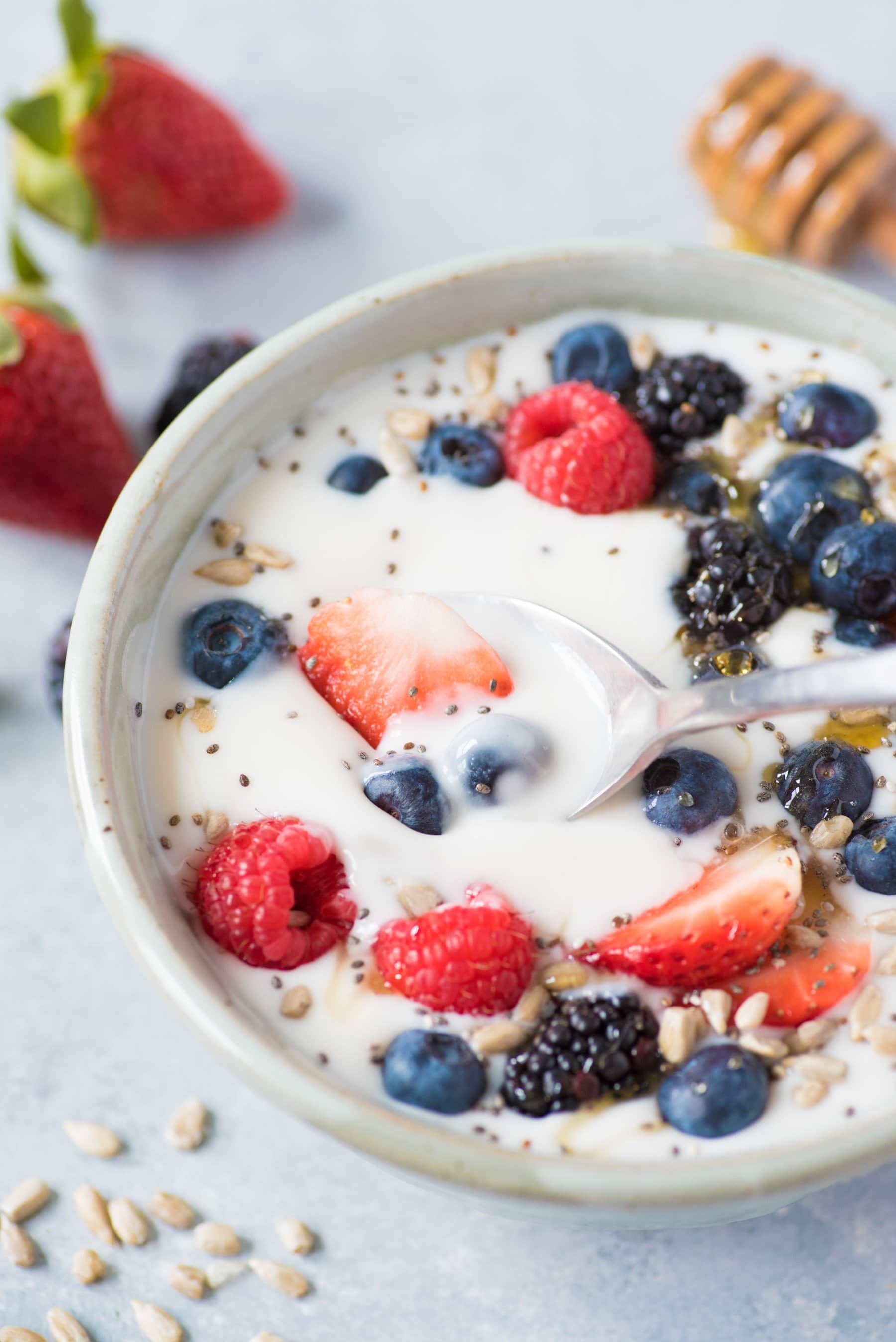
What kind of starter do I need for this coconut yogurt recipe?
When you're making your yogurt, you will need to inoculate your batch with either yogurt starter culture or pre-made plain yogurt from the store. I've done both, and they both turn out beautifully. If you choose to use a yogurt starter, this Yogourmet starter is my absolute favorite*. It has very specific strains of bacteria that are great for your tum-tum-my naturopath has actually recommended I eat yogurt only when it's made with the strains in this yogurt starter to protect my gut health.
(*Please note: this starter contains skim milk powder. If you're looking for a completely dairy-free way to start your batch of coconut yogurt, you'll want to use a different starter or a dairy-free yogurt with live active cultures like we mention below!)
The way easier (and cheaper) route is to use premade yogurt as your starter. Just take three tablespoons of whatever plain yogurt you'd like (dairy, soy, coconut, almond-all fine) that has live, active cultures in it-and whisk that in to innoculate your batch of yogurt. Then, when your batch is done, reserve about ¼ cup of it to make your next batch. You'll never have to buy yogurt again! It's the gift that keeps on giving.
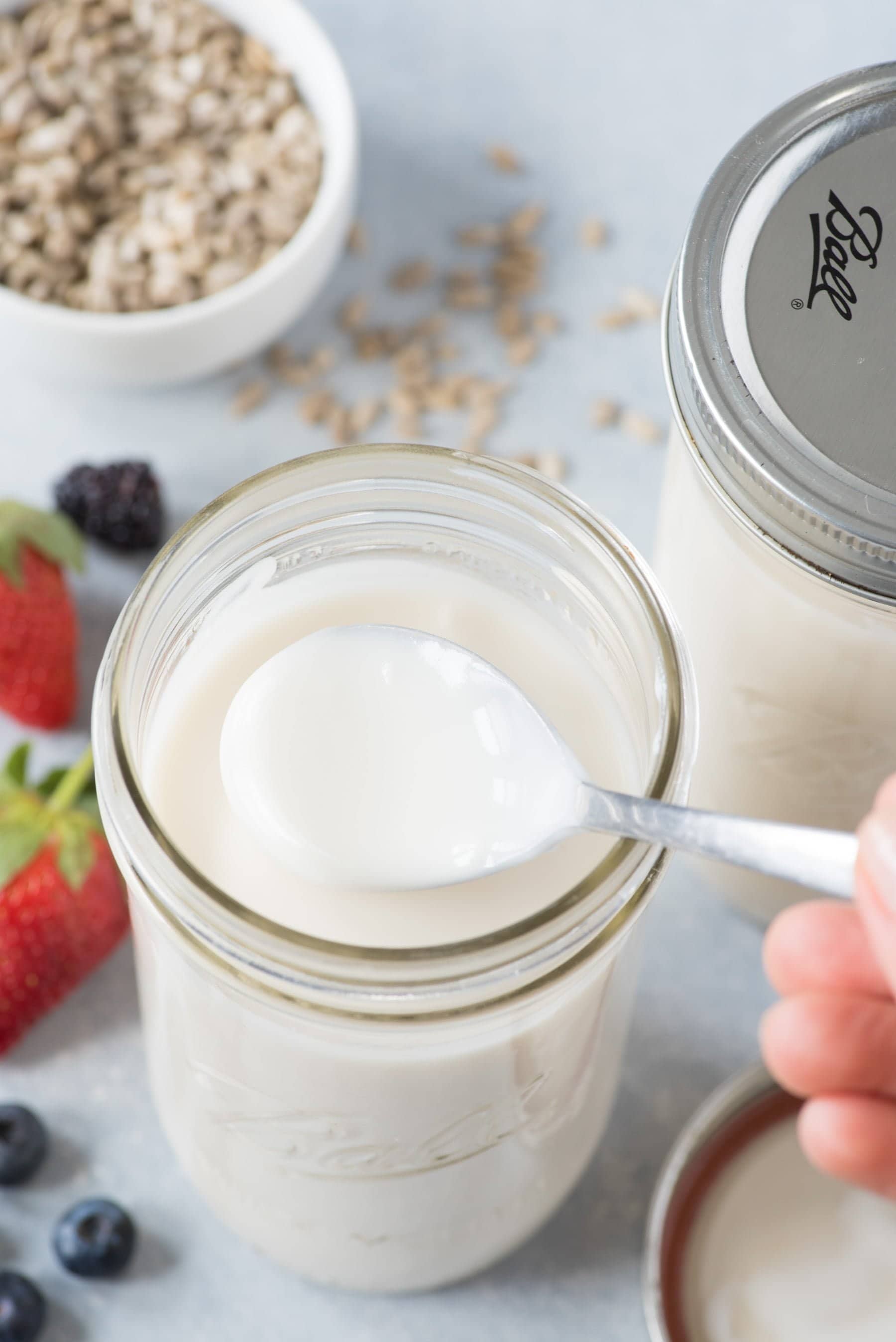
What if I don't have an Instant Pot?
Of course, you absolutely don't have to have an Instant Pot to make yogurt. You can do it in the slow cooker or on a heating pad (my preferred method pre-Instant Pot) or even under the light in your oven-basically, any way you can consistently keep your yogurt around 100°F for 8-36 hours while it ferments will do the trick. The Instant Pot just makes keeping the temperature there SO FLIPPING SIMPLE. It removes all the variables and just makes for perfect yogurt every. single. time. Happy yogurtmaking!
How do I flavor or sweeten homemade coconut yogurt?
When the yogurt is finished and cooled is a great time to stir in any sweetener, jams, fruit butters or flavoring like vanilla extract to add flavor. Here are some good options:
- homemade pumpkin butter
- homemade apple butter
- simple blueberry jam
- strawberry jam
- strawberry-rhubarb jam
You can also obviously use this yogurt in any recipe that calls for yogurt. Here are some good places to try out your new batch of yog:
- healthy overnight oats
- strawberry chia pudding
- yogurt with fruit on the bottom
- fruit and yogurt parfaits
📖 Recipe
Instant Pot Coconut Yogurt
Ingredients
- 1 quart full-fat canned or boxed coconut milk I get best results from this coconut cream, but any full fat coconut milk will work
- ¼ cup maple syrup do not sub in honey-it has its own bacteria that will fight the yogurt culture
- 3 tablespoons plain yogurt with live active cultures dairy, soy, coconut, almond-all fine OR one packet of freeze dried yogurt culture (I like this one)
- OPTIONAL THICKENER: 1 to 2 teaspoons unflavored grass-fed beef gelatin OR ½ to 1 teaspoon powdered agar agar
Instructions
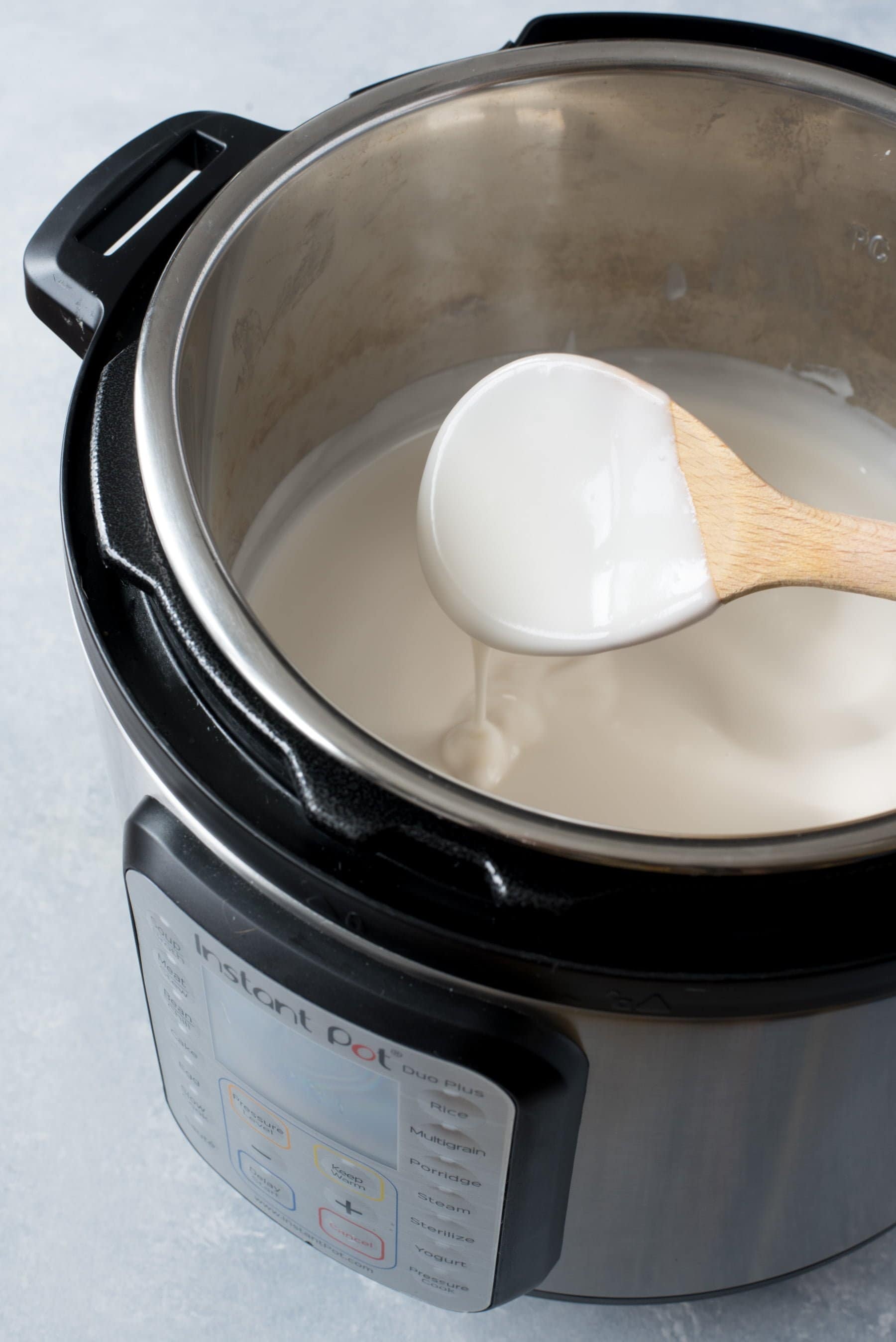
- Pour the coconut milk and maple syrup into the pot of the Instant Pot. Whisk well, then press the "Yogurt" button, and then adjust the setting until you see "boil." Let the Instant Pot run through the process (it's getting the milk up to a temperature of around 185°F), whisking occasionally. No need to place the lid on the Instant Pot during this stage.
- When the Instant Pot beeps that it is finished, allow the milk to cool until it is between 100ºF and 110ºF. This can take upwards of an hour.
- If using starter yogurt: When the milk is at the correct temperature, ladle out about ½ cup of the warm milk into a small bowl, and whisk with the 3 tablespoons plain starter yogurt until smooth. Pour the mixture back into the Instant Pot and whisk well.
- If using freeze-dried yogurt culture: When the milk is at the correct temperature, sprinkle on one packet of the starter culture and then whisk very well to combine.
- If using a thickener, sprinkle on top of the warm milk, and then whisk very well to combine.
- Close the lid of the Instant Pot (no need to seal), and press the "Yogurt" button. Adjust the setting until you see the time display. Set for the desired amount of fermentation time. Eight hours is bare minimum, but I *much* prefer yogurt that has been fermented closer to 24-36 hours. This results in a naturally thick and tangy yogurt-very like regular Greek yogurt. Plus, it has more probiotics! (See notes for more info about time and temp)
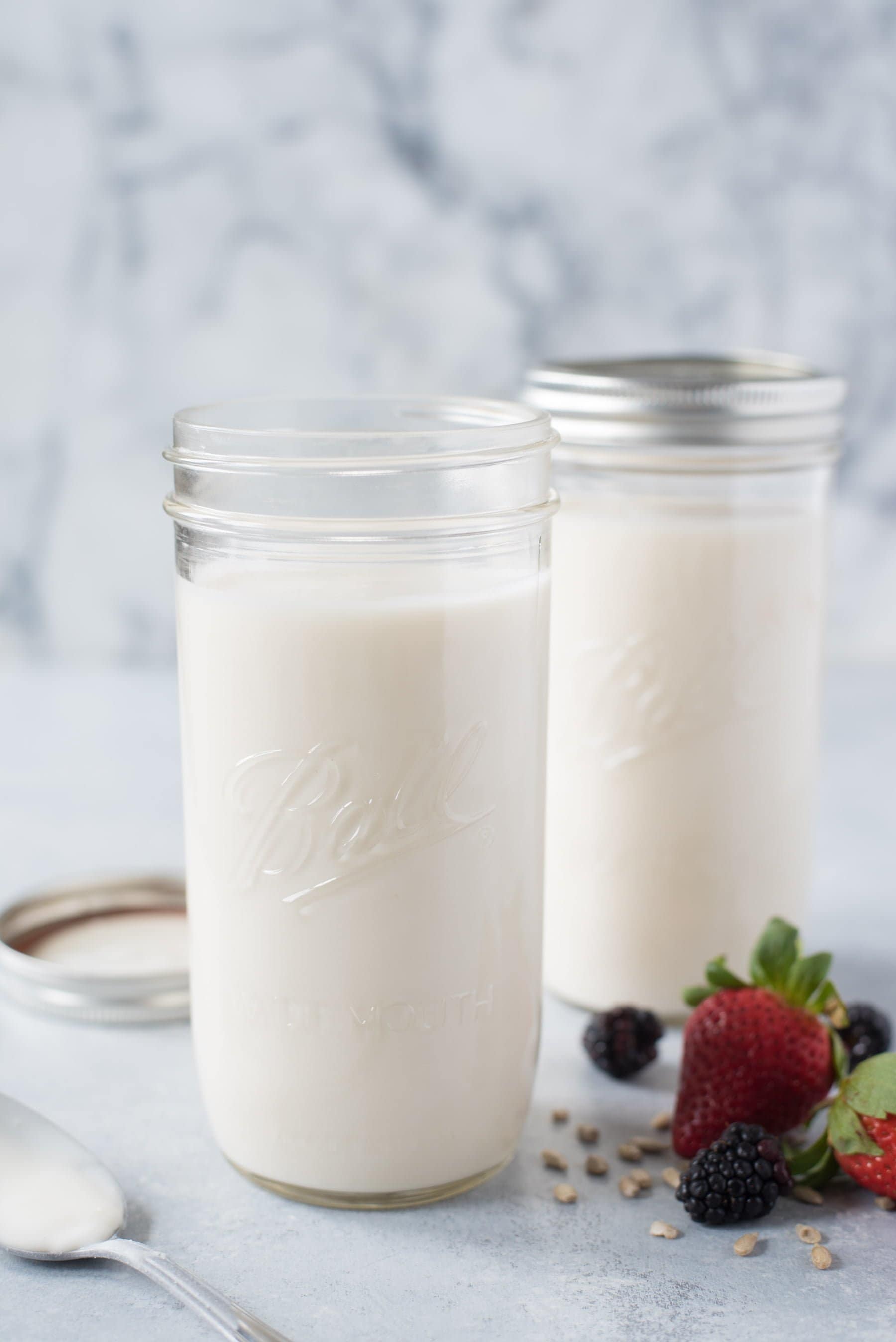
- When the fermenting time is up, transfer the yogurt to a glass storage container (I use a wide mouth quart jar) and keep in the fridge. It will thicken up considerably as it cools.
Video

Notes
- If you like thicker, Greek-style yogurt, I recommend using either the gelatin or the agar agar. However, if you want to leave those our, the longer you ferment, the thicker the yogurt gets naturally.
- If you do use the thickeners, the upper range will get you a thicker, Greek-style yogurt, while the lower will just thicken to a "normal" yogurt consistency.
- Since coconut milk doesn't have the same kind of sugars that cow's milk has, the added maple syrup is to give the bacteria a jump-start meal-they eat almost all the sugars and the resulting yogurt isn't sweetened at all.
- My favorite starter (linked in the post and the recipe above) contains skim milk powder. If you're looking for a completely dairy-free way to start your batch of coconut yogurt, you'll want to use a different starter or a dairy-free yogurt with live active cultures.
- Some people recommend using opened probiotic capsules as yogurt starter, and it can work-depending on your probiotic. Proceed with caution though, as some can make yogurt taste really not good.
- When you spoon your yogurt into a container for storage, make sure to reserve a little bit for the next batch of yogurt in a small jar (I just fill one of these quarter-pints). That way, you'll never be without yogurt starter.
- I love my Thermapen for yogurt-making (and honestly, everything else in the kitchen), but if you don't have a thermometer, it's not a big deal. Another trick is to place a (clean!) finger in the milk-when you can hold your finger in the milk while counting to ten, it's cool enough to pitch in the yogurt starter.
- Some folk in the comments mentioned that their Instant Pot only maintained the desired yogurt fermentation temperature (around 110°F) when set for up to 8 hours. Set for longer than 8 hours, their IP used a lower temperature (around 88°F). Our IP doesn't adjust the temperature in this way, so please check your owner's manual before choosing your time setting!

Hi. Great recipe. I use my Instant Pot yogurt function. I put coconut cream in and set to Boil. But it seems to stop (ygrt shows on screen) when milk temp is 110, not 185. So I have to use sauté function. You find that yours takes it up to 185?
I had this problem too, I found I have to stay at the instant pot and keep whisking and then it gets to a hotter temp. My theory is the milk at the bottom of the pot reaches that temp and it shuts off before the whole batch does.
I am a newby to the instant pot world and was so excited when I realized that I could make my own vegan yogurt as I spend a fortune buying it in the store. I have already started a batch and it is fermenting now so I will see what I end up with, but I did have a point of confusion that I am hoping you can clarify. At step 6 in your recipe, you say to press the “Yogurt” button and adjust the setting until you see the time display. But on my unit, which is a 3 qt Duo, when you press the "yogurt" button once, 8 minutes is automatically displayed in the "less" temperature setting. In the manual for my unit, it says that for yogurt the "normal" setting should be used. I went ahead and chose the "normal" setting and set the timer at 24 hours, so I will see what happens, but I am curious if I should have chosen the "less" setting instead? I am sure all units are different and I imagine it is difficult to offer instructions for all. Thank you so much for posting this recipe!
Update: My yogurt went terribly wrong. I stopped it after 18 hours and when I looked inside saw that it had quite a bit of pink discoloration and a strong 'penicillin' smell. I used full-fat canned yogurt and for the starter, some plain unsweetened coconut yogurt. What I might have done wrong is that I had some confusion on how to set my unit and I also didn't stir occasionally in the pasteurizing mode. I also added the maple syrup late because I somehow missed that step. Next, I ran it on the "less" setting for about a half an hour before I decided to change it to the "normal" setting. I am thinking I will purchase a yogurt starter today and see if I have better luck with that. Luckily I cut the recipe in half so it wasn't quite so much of a waste, but if anyone would like to offer guidance I would so appreciate it.
I am excited to try homemade yogurt! I'm using coconut cream, but have a question regarding the starter. I have yogourmet freeze-dried starter, but it's 6 months past the best-buy date. I also have some plain yogurt in the fridge. Would it be too much to use both the freeze-dried & "real"yogurt together as my starter? Or is that just too much starter?? If so, which would be the best to use, do you think? Thanks...
There is no such thing as too much starter, but there is no real need to double it up. If you're going to use yogurt from the fridge, you could just use that and be golden. 🙂
I'm ready to give home made yogurt a try! My Yogourmet freeze-dried yogurt starter is 6 months old (it's been in a cupboard, not the freezer), so I'm concerned it might be too old. I have plain yogurt in the fridge. Would it be OK to use both the freeze-dried starter & the yogurt as a starter in case one doesn't work? Or is that too much starter??
I was so excited to try this and my batch went horribly wrong 🙁 followed the instructions and when I opened my instantpot after fermentation it smelled and looked horrible. It was a liquid consistency and had small pinkish pieces floating on the liquid. It went straight down the drain. any ideas what caused this?
- I used full fat coconut milk from carton
- I put in maple syrup
- I used the suggested freeze dried yogurt culture
- I fermented for 36 hours
- I will say this was my first time using my instant pot but I’m pretty sure I followed the instructions and set it correctly because I obsessively researched it lol...
- that said, is it supposed to be hot after fermentation? The inner pot wasn’t hot.
Is my yogurt culture bad maybe??
Hi Rachel: The Instant Pot is supposed to be warm (right around 100°) for the duration of the fermentation time. It should be warm to touch.
It's possible that you had some sort of bad microbe innoculate your batch—maybe something stuck to the spoon you used or the Instant Pot itself. I'm glad you threw it out!
Help! I've had two failed batches now and I can't figure out what I'm doing wrong. This last batch had some very funky looking growth on it when I opened the instant pot after 24 hours... I was even sure to sanitize everything thoroughly beforehand. Do you use the "less" or "normal" function on the IP?
Hi, Abigail! We're so sorry to hear you're having difficulties making your yogurt! Unfortunately, none of our Instant Pots have the "Less" or "Normal" option when we press our Yogurt buttons. It's possible that you have a different model than we do, in which case your best option for answering that question would be to check out your user manual. There will be instructions in there on how best to make yogurt using the yogurt function on your particular model and that should help you with troubleshooting! If you give it a read and you're still confused, let us know and we'll try to help you get it sorted!
Correction, I drained it in some cheese cloth and now it is perfect!
Mine did not turn out either. It’s more like Kefir. Followed directions and cooked it for 36 hours.
Thank you so much for this recipe. Mine turned out amazing. I used the full fat coconut cream, pure maple syrup, greek yogurt with live cultures. Fermented for 24 hours, after that I let it sit in the fridge until it was nice and chilled then drained it to get a nice thick yogurt. My husband loved it! Making a double batch this time because it didn't last in this house.
**I know it's not vegan because I added the greek yogurt but it's such a small amount it didnt bother us**
My version of the InsantPot doesn't have the Yogurt button. What are my options
I'm not sure if that version of the IP can make yogurt, because it can't maintain the low temperature for the fermentation time. Sorry!
I have made this yogurt twice and followed the instructions exactly, letting it ferment for 18 hrs. Each time I’ve put it in the fridge, it doesn’t thicken and instead separates with a hard layer on top. Any tips?
I just made this and it came out great taste wise, however I used the beef gelatin option and after it cooled it has little lumps in it. Any idea what I did wrong?
Sometimes gelatin can lump up when you stir it in. I like to sprinkle it on top of the yogurt in a thin layer and let it absorb/bloom before stirring it in. That might help!
HELP!
Hi! I tried the recipe provided. I made certain to follow it exactly. Complete failure.
First, the yogurt had a crust on it (not just a film but a crust - I noted someone else in this thread had the same issue too). Honestly, I didn't care about the crust - if it had been good I would have eaten it.
Second, even though it was still runny after being refrigerated I didn't care. BUT, it was SO sour it was ridiculous. Not Greek Yogurt type sour... just, yuck, sour.
I used Coconut Cream because it's really good on lots of things.
Any questions I can answer or any suggestions as to what I might do would be very appreciated.
Hi Lonnie: So sorry it didn't turn out for you! I'm not going to be much help, because I've never had a crust form on my yogurt—no clue what that could have been from. As far as the sourness, you can shorten your fermentation time to get it less sour. Good luck!
I have followed this recipe 4 times now, tweaking it just a little bit each time in order to try to make it thicker (and not so runny!). These are the 4 ways I've tried it:
1st with agar agar; powder & the freeze-dried probiotics
2nd with gelatin + agar agar powder and freeze-dried probiotics
3rd with gelatin + agar agar powder and an actual (cow's milk) yogaurt culture
4th with gelatin only (no agar agar) and icow's milk) yogurt culture. This 4th time, instead of putting the coconut milk right into the instant pot main pot, instead I put the coconut milk into a glass bowl, put water in the bottom of the instant pot and put the bowl on the rack. This time I used the pressure cooker (for 1 minute) to "scald" the milk. Then I followed through with all the rest of the instructions.
NEVER have I gotten a nice yogurt consistency. Always very, very runny.
Do you have any suggestions?
I've tried this recipe with different coconut cream brands and it has worked. The trick is to let the yogurt cool completely in the fridge overnight before touching it once it is done fermenting. Both times, my yogurt was watery when it was done fermenting (I fermented for 24 hours) and I placed it in the fridge overnight, and it had thickened the next day to a creamy consistency. Also, the first time I used canned coconut cream from Wholefoods (I think it was 365 Organic Coconut Cream) which worked splendidly; the second time, I used the brand recommended in this recipe, Native Forest Organic Coconut Cream, and it was super oily and left a solid layer of hardened coconut on top of the yogurt. I would NOT recommend Native Forest brand canned coconut cream. Also, the gelatin recommended in this article did not work so great for me but I think I used too much and didn't mix properly so not ready to give up on the gelatin yet. Thanks for the recipe!
I have made several batches of this and we love it! The last batch sort of got forgotten in the back of the fridge - it's probably been in there for 3 weeks. When we opened it, it sort of exploded... not a big explosion, but definitely began oozing up out of the jar. It tastes VERY tart, but no sign of mold. Is it safe to eat?
It sounds like it just fermented a bit longer—trust your senses, if it doesn't smell or taste like it's bad, I tend to eat it. But if there is any doubt to its safety, throw it out.
My husband is a risk taker - he ate it and didn't have any negative result. It was waaay too tart for my taste though! Thanks for your response.
Can you double this recipe?
HI, I made coconut yogurt for first time and wanted to provide my feedback. I used your recipe and suggestions. I did 36 hours in instapot. When I opened up this morning, I was initially disappointed because it "seemed" too runny. However, once I refrigerated, it thickened up nicely. Keeping in mind dairy free yogurt wont be as thick.
Couple of things worth mentioning--the yogurt starter packets MUST be refrigerated! So do NOT purchase over internet, buy at health food store in cold section. I used 3 cans of organic coconut cream and 1 T of grass fed beef thickener.
I took about one cup of yogurt, added 2 large frozen organic strawberries, 2 drops stevia and blended. It was amazing with my home made granola!! Highly recommend!
At which point during the process can you add the open probiotic capsule?
I added them at the same time as the yogurt and gelatin. I figured that way, if they really are doing anything, they had time to reproduce.
I have been meaning to comment since the 1st time I tried this recipe. After reading the feedback I made a few small changes. Besides using my favorite coconut yogurt to inoculate it, I opened 2 probiotic capsules and dropped them in because who doesn’t need more probiotics? I reduced the maple syrup by half, one of the things I usually Hate about nondairy yogurt is that it is sweet. If I want sweet I will add something to it but sweet is impossible to use for raita or tzatziki. I know you said it needed the sugars but with so many people saying it was too sweet I was willing to risk it. I also added an entire packet of gelatin because I wasted thick, Greek style yogurt, though you could easily replace with agar agar, I just had powdered gelatin and decided to use it. I put it in for 36 hours but it was ready when I was working so it fermented longer until I could get to it. When opens it smelled like yogurt and had some bubbles like it was fermenting so I threw it in some jelly jars and put it in the fridge to cool. It is amazing! Really tart like real plain yogurt, thick and creamy, not at all like a jello (I also really dislike jello 😏), a complete success! My husband made Indian food one night and used it to make a raita and everyone loved it. I did try, the next time, to use the coconut milk sold for drinking, coffee etc, and I want to reassure your future inquiring people that NO, it Will Not Work! 3rd batch is regular canned coconut milk/cream and it is great once again. Thank you for a delicious recipe.
Hello!
Thanks for the recipe. I've been reading tons of recipes trying to find the right one before attempting this.
My yogurt turned out nice and thick and tangy, but two things I'm wondering if you have advice on.
The texture is grainy. Would straining through cheesecloth at some point in the process have helped?
The taste is tangy like yogurt, but is also quite sweet. You mentioned it won't be sweet at all, does that mean something didn't happen correctly in the process?
Thanks!
I'm glad you had good results! Coconut yogurt is inherently a little bit gritty—I've had luck with heating up the milk before fermenting, and then blending the dickens out of it in my high-speed blender. And if you still have some sweetness, next time you can reduce the amount of added sweetener (but also remember that coconut milk is inherently sweet—so you can't make it "unsweetened" like you could with cow's milk).
Hello Cassie, what an absolutely beautiful recipe! I made a batch, and it is awesome. Thank you so much for taking the time to share.