
Salmon Patty Recipe



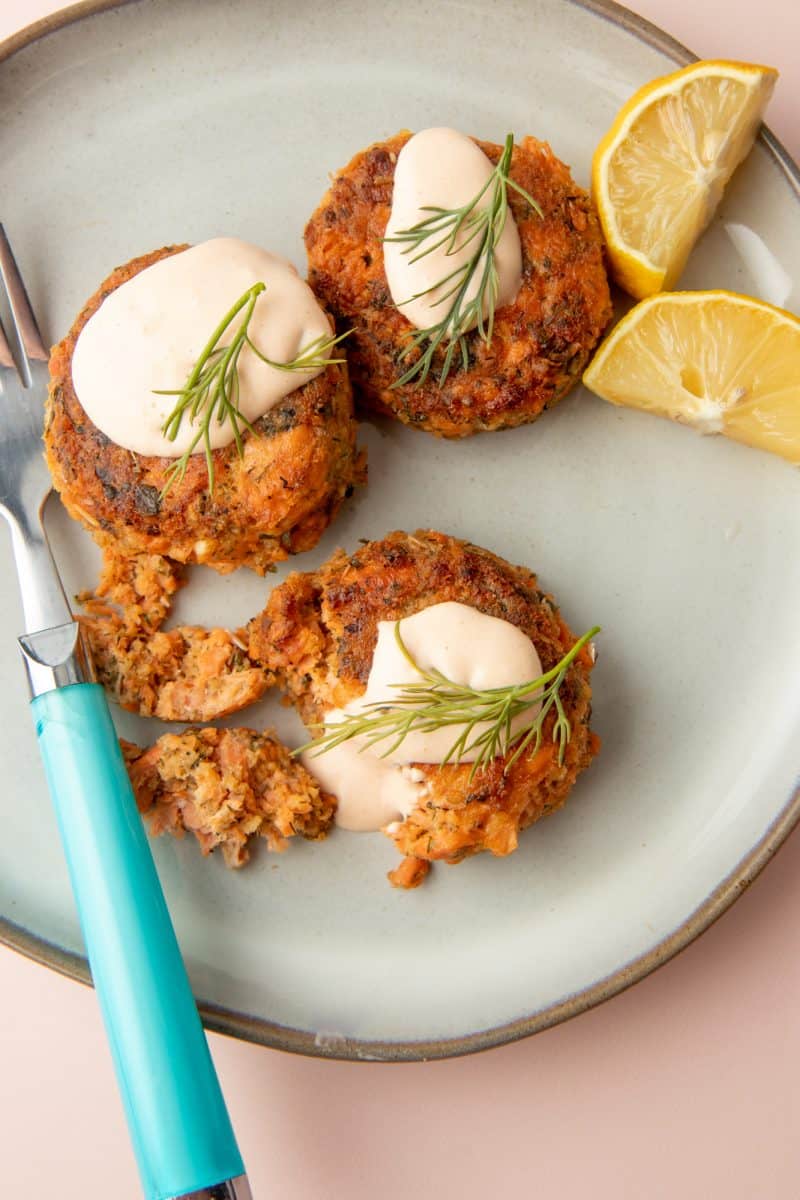
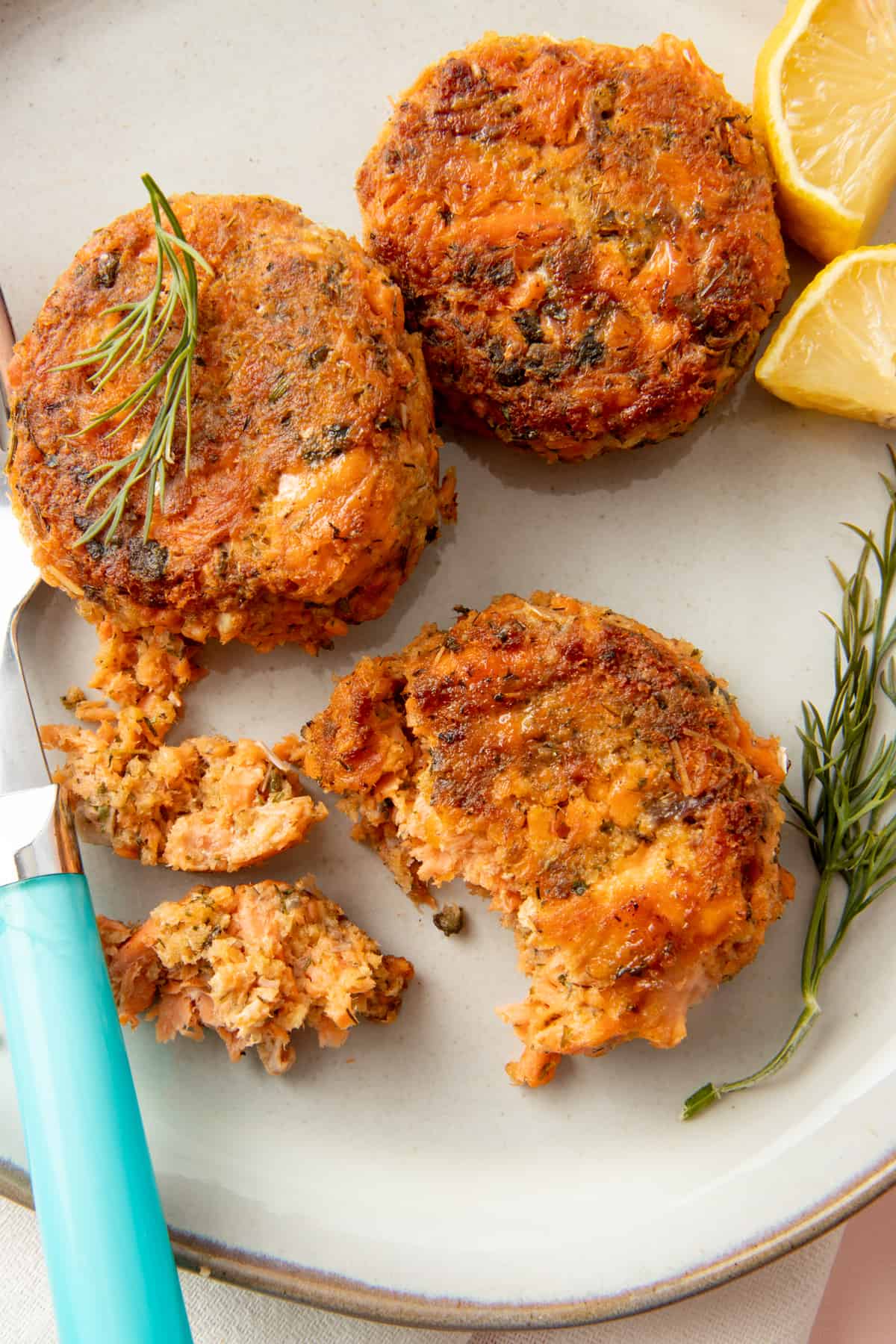
This salmon patty recipe transforms a humble pantry staple into something fancy enough for a dinner party in just 20 minutes. And yes, they actually stay together!
Featured Review

"Delicious!!! I used chia seeds since eggs are so expensive… I had them with asparagus and hollandaise sauce and it was sooo good dipped in the sauce."
- LH -
🔍 Recipe At-A-Glance
- Prep Time: 10 minutes
- Cook Time: 10-15 minutes
- Flavor Profile: Savory and briny with a crispy golden crust. The capers and dill make these taste anything but pantry-basic.
- Texture: Crispy outside, tender and flaky inside.
- Make It Your Own: Easily made gluten-free, egg-free, or baked instead of fried.
- Difficulty: Beginner-friendly. If you can mix ingredients in a bowl and flip a patty, you've got this.
Salmon patties were one of the first recipes I ever learned to make on my own, and I still have my mom's original version scrawled on an index card in my recipe box. Over the years I've tweaked it-adding capers and fresh herbs-and turned a ho-hum pantry meal into something I'd serve at a dinner party without a second thought.
Why You'll Love This Recipe
Salmon patties are weekly staple in our house-meaning I have made literally thousands of salmon patties in my life! And these bad boys turn out perfectly crunchy, flavorful, and tender every single time. Here's why you'll love this recipe:
- I've made thousands of salmon patties over the years: this recipe is fully dialed in and will turn out perfectly your first time.
- Use canned, fresh, or frozen salmon: canned is my go-to because it's affordable and lives in your pantry for last-minute dinners.
- Even salmon skeptics love these: I make them into small balls for younger kids and they disappear every time.
- They freeze beautifully: I always double the batch so I have an easy dinner ready to go on the laziest of weeknights.
What You'll Need
This is the ultimate pantry recipe. I like to keep everything on hand so can make salmon patties whenever 5pm rolls 'round, and I have no idea what to cook (happens to me too!). Here's what you'll need:
- Canned salmon: Wild Alaskan pink or red salmon is my top pick. Pink has a slightly milder flavor. Fresh or frozen filets work too (more info on that in the recipe card)!
- Eggs: The binder that holds everything together. If you cannot do eggs, you can also blend salmon in a food processor or blender to use as the binder.
- Panko breadcrumbs: Panko gives you a crispier crust than regular breadcrumbs. Swap in gluten-free panko to make it GF.
- Capers: My secret weapon. Optional, but they add a briny punch that takes these from pantry dinner to something special.
- Fresh or dried dill: Dill and salmon are a match made in heaven. Either works here.
- Garlic and onion powder: Powders only - no crunchy bits of raw alliums in your patties.
- Avocado oil for frying: High smoke point, neutral flavor. Coconut or olive oil work too.
Watch The Video
How to Make Salmon Patties
Follow along with my numbered instructions and step-by-step photos to see exactly how I cook these salmon patties in my home kitchen. Here's how to do it:
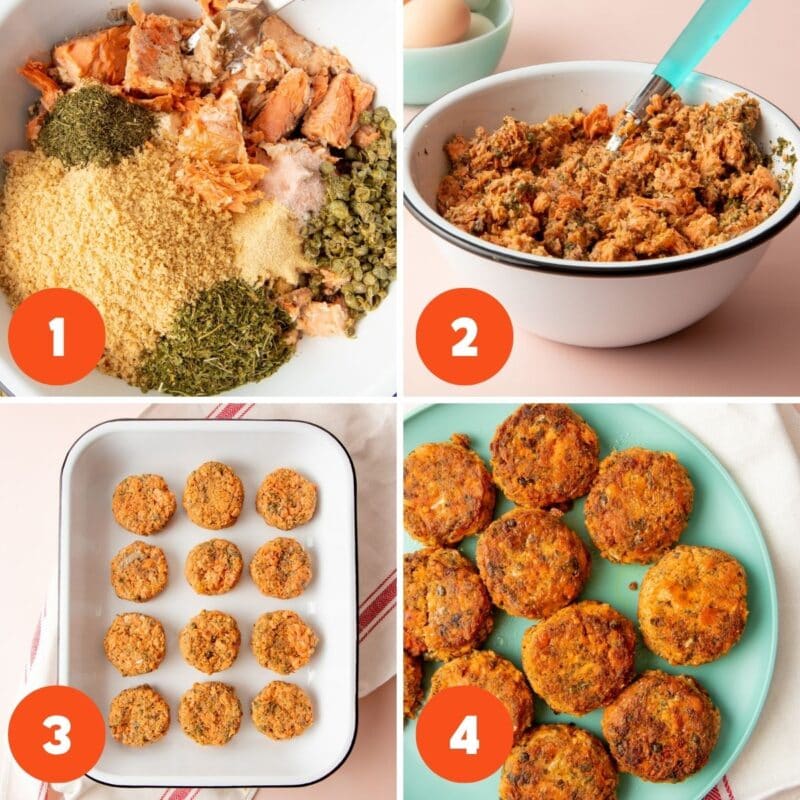
- Combine everything in a large mixing bowl.
- Mix everything together with a fork in a large bowl, making sure not to break up the salmon too much. Let it rest for a few minutes.
- Form the mixture into patties, and pan fry them in a hot skillet in 2-3 batches over medium heat.
- Move the finished salmon patties to a paper towel-lined plate to absorb some of the oil while you cook the rest of the cakes.
Variations and Substitutions
This recipe is super forgiving and customizable, here's how to make some swaps:
- Make it gluten-free: Sure can! Swap out the breadcrumbs for gluten-free panko breadcrumbs.
- Make it paleo/Whole 30: Swap out the breadcrumbs for ⅓ cup blanched almond flour and two tablespoons coconut flour.
- Make it egg-free: Use chia, flax, or gelatin eggs as described in the recipe notes below. Or: an ever better trick is to take ¼ of the salmon and blend it into a paste in a food processor or blender and use that as the binder.
- Make it with fresh or frozen salmon: Roasting the filets (thawed if frozen) until flaky in a 400°F oven-about 7-12 minutes, depending on the thickness of the filets. Then flake the salmon and use just as you would with canned salmon.
- Bake them instead of frying: Bake on a greased or silicone baking mat-lined baking sheet at 375°F for 15-18 minutes, or until golden brown.
- Use the air fryer: Spray your basket, add the patties, and air fry at 400°F for 8-10 minutes, flipping halfway through, until golden and crispy.
- Make tuna patties: For the recipe below, you'll need between 5-6 of the 6-ounce cans of tuna. Everything else in the recipe works as written with tuna.

Storage and Reheating Tips
Cooked salmon patties will keep in an airtight container in the fridge for 3-5 days. We reheat salmon cake leftovers in the toaster oven or air fryer at 350°F until crisp and heated through (about 3-5 minutes). You can also reheat them in the conventional oven or in a skillet. I would skip the microwave-not only does it make the patties soggy, but it'll also stink up your whole house!
Make Ahead and Freezing Instructions
To make these ahead, I recommend freezing before cooking-just form the patties as the recipe lists, and then freeze in a freezer-safe container with parchment paper to divide layers of patties. You can also flash freeze the patties on a baking sheet lined with parchment paper, then when frozen, transfer the patties to freezer bags. Thaw the frozen patties in the refrigerator, and then cook them in a skillet the same way you would the fresh patties.

Expert Tips and Tricks
- Wild Alaskan red or pink salmon is going to be the best of the best when it comes to canned salmon. We prefer pink salmon in our house because it has a slightly less fishy flavor.
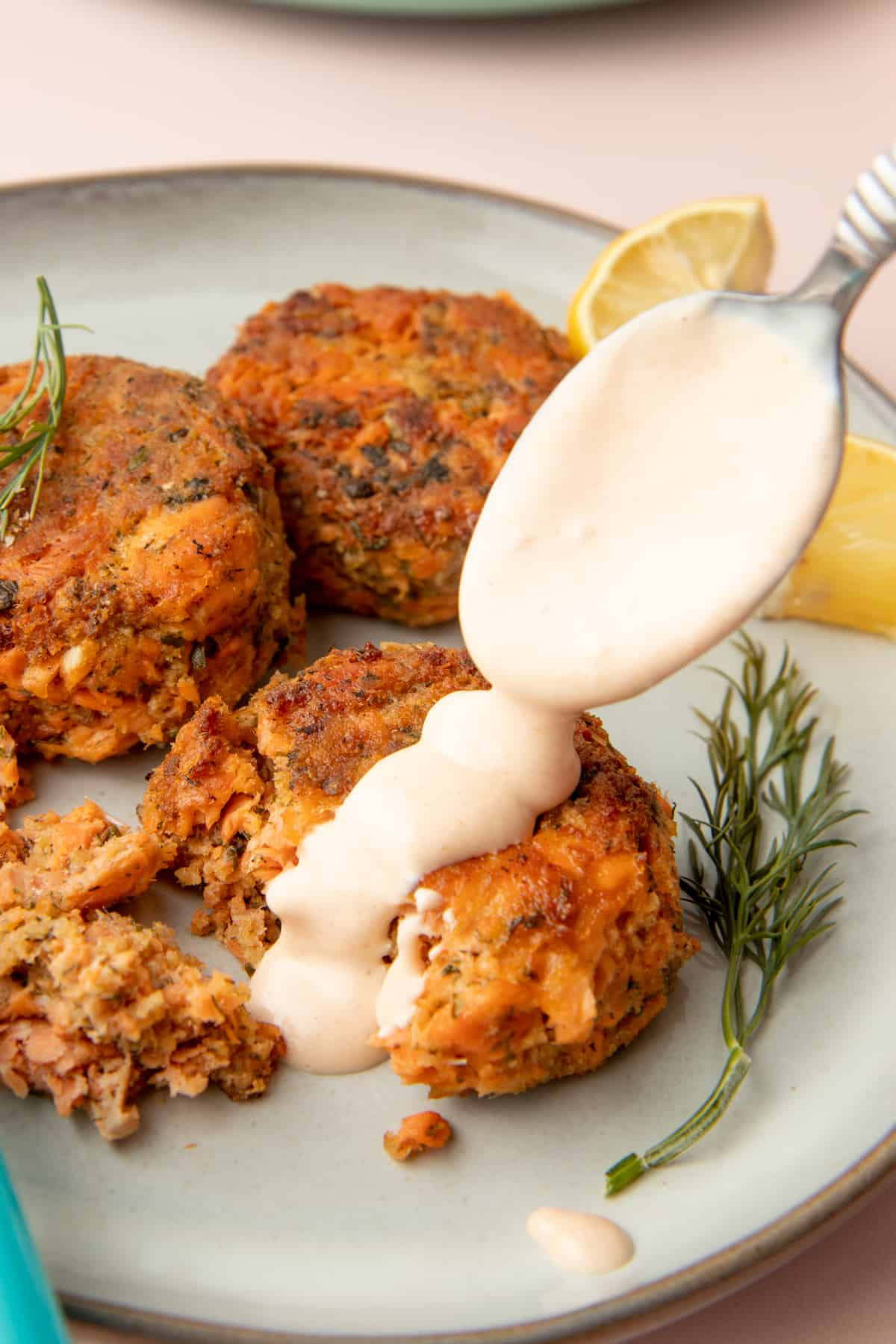
- Salmon patties are great topped with a tartar sauce, remoulade sauce, or tzatziki sauce.
- Canned salmon comes with some small bones in it-no need to take them out. The canning, mixing, and cooking processes breaks the bones down to where they are completely edible (and even a good source of calcium).
- Some folks (AKA: my mom!) use crushed saltines in place of breadcrumbs in this recipe.
- Canned salmon varies in moisture and fat content, so if your patties seem to fall apart, you might need to add more "glue" in the form of eggs. Just add in another egg, plus some extra bread crumbs, until you get a very sticky consistency.
- It's also important to not mess with the salmon cakes once they are in the skillet frying. Place them in the oil, and then don't move them! Let them get a good, solid crust on the outsides before flipping-this will help keep them together. Repeat with the other side.
FAQs
The most common culprit is not enough binder. If your mixture feels loose, add another egg and a handful of extra breadcrumbs until it's very sticky. The other big one: moving the patties too soon. Once they're in the pan, leave them alone until a solid crust forms before flipping.
Wild Alaskan pink or red salmon. Pink has a slightly milder flavor, which is what we use in our house. Avoid "salmon in oil" varieties-they'll make your mixture too wet.
Yes! Form the patties before cooking, then freeze them in a single layer on a parchment-lined baking sheet. Once frozen, transfer to a freezer bag. Thaw in the fridge overnight and cook as normal.
Sure can! Bake at 375°F for 15-18 minutes on a greased baking sheet. They won't get quite as crispy as pan-fried, but they're still delicious.
What To Serve With These
In our house, we love serving our salmon cakes with classic comfort food sides like mac and cheese, sweet potato fries, or potato salad. We always make sure to have something fresh and green on the side, too-roasted asparagus and Parmesan or a fresh green salad are always winners in our house!
Love this recipe? Please leave a review and a 5-star rating! This helps other home cooks find this recipe. Appreciate you!
📖 Recipe
Easy Salmon Patty Recipe
Ingredients
- 2 14.75- ounce cans salmon drained (see notes about using fresh or frozen fillets)
- 2 large eggs gelatin, flax, and chia eggs all work as well, see notes
- ½ cup panko bread crumbs
- ¼ cup minced fresh parsley or 2 tablespoons dried parsley
- 1 tablespoon capers drained and minced, optional
- 1 tablespoon fresh minced dill or 1 teaspoon dried dill
- 1 teaspoon garlic powder
- ½ teaspoon onion powder
- ¼-½ teaspoon salt see notes
- Avocado oil, coconut oil, or other high smoke point oil for cooking
- Fresh dill, lemon wedges, tartar sauce, or remoulade sauce for serving
Instructions
- In a medium-size mixing bowl, combine 2 14.75- ounce cans salmon (drained), 2 large eggs, ½ cup panko bread crumbs, ¼ cup minced fresh parsley or 2 tablespoons dried parsley, 1 tablespoon capers (if using), 1 tablespoon fresh minced dill or 1 teaspoon dried dill, 1 teaspoon garlic powder, ½ teaspoon onion powder, and ¼-½ teaspoon salt. Using a fork, combine the mixture well, but don't break up the salmon too much-you want some good size flakes. Set the mixture aside and allow it to rest for about 5 minutes.
- Meanwhile, preheat a large skillet over medium-high heat. Add enough cooking oil to coat the entire surface with a ¼-½" layer of oil.
- Form the salmon mixture into 12 patties, about 2 ⅓" in diameter by 1" high. Place the patties in the hot skillet, making sure to not overcrowd the pan-depending on your skillet size, you may have to do 2 or 3 batches.
- Pan fry over medium-high heat for 6-7 minutes each, or until the underside is crisp and golden brown. Do not move the salmon cakes while they are cooking, or they may crumble apart. Gently flip, and fry for another 4-5 minutes or until the other side is crisp and golden brown. Transfer to a paper towel-lined plate to drain, and repeat with remaining formed patties.
- Serve topped with tartar sauce or remoulade sauce, plus fresh lemon wedges and fresh dill, if desired.
Video
Notes
- If you choose to use capers (which add a wonderful briny flavor), use less salt-¼ teaspoon. If you leave the capers out, use ½ teaspoon salt. Also keep in mind that the sodium content of canned salmon can vary widely. If working with a new brand, you might want to mix up the cakes using ¼ teaspoon of salt, fry up a small meatball of the mixture to taste test, and then adjust the salt from there.
- We do not recommend making this in the food processor. This quickly turns the salmon into paste-which makes for less-than-appetizing salmon cakes.
- You can sub in fresh minced onion and garlic for the powders; however, you'll need to saute the fresh vegetables before adding them to the mixture-the salmon cakes do not cook long enough on their own to soften fresh vegetables.
- Canned salmon comes with some small bones in it-no need to take them out. The canning, mixing, and cooking processes breaks the bones down to where they are completely edible (and even a good source of calcium).
- You can make this recipe using fresh or thawed frozen salmon filets by first roasting the filets until flaky in a 400°F oven-about 7-12 minutes, depending on the thickness of the filets. Then flake the salmon and use just as you would with canned salmon. Fresh and frozen salmon contain no sodium, so use ½ teaspoon of salt in your salmon cakes mixture.
- This recipe works well with gelatin, flax, and chia eggs. To make two flax or chia eggs, combine 2 tablespoon chia seeds or ground flax seeds with 6 tablespoons of warm water-let sit for 5 minutes, or until thick and gelled. To make two gelatin eggs, combine 2 tablespoons of unflavored gelatin powder with 2 tablespoons cool (room temp is fine) water. Let sit for a minute or two to bloom. Then stir in 4 tablespoons of boiling water vigorously until the gelatin is dissolved. Let the mixture sit for 1-2 minutes to thicken and gel.
- Another egg-free option is to take ¼ of the same and blend it into a paste in a food processor or blender and then use that in place of the egg as a binder. You might need to add a little water to get it to be the right texture.
- You can make these salmon cakes paleo and Whole30-friendly by using ⅓ cup blanched almond flour and 2 tablespoons coconut flour in place of breadcrumbs.
- Oven baked: Bake on a greased or silicone baking mat-lined baking sheet at 375°F for 15-18 minutes, or until golden brown. They won't be quite as crispy as the fried version, but they'll still be delicious.
- Air fryer: Spray the basket, add the patties in a single layer, and air fry at 400°F for 8-10 minutes, flipping halfway through, until golden and crispy.
- This recipe also works beautifully with canned tuna!

Delicious!!! I used chia seeds since eggs are so expensive right now but I will do it from now on because of the fiber, not having to wash my hands after forming the patties, and not having to worry about the patties cooking all the way through. I had them with asparagus and hollandaise sauce and it was sooo good dipped in the sauce. Thanks for the recipe 🙂
You're so welcome! Thanks so much for coming back to tell us about your experience. We really appreciate it!
I just made these and ate one. baked in the oven. GF crumbs. I had 6oz cans of salmon so I did 4, sauted onions, I would even double the capers I think. or maybe i'll put some in the dipping sauce. They stayed pretty much together but a lot of huge cracks on top, maybe how they were put together. Will make again!
I made these with one 150g can of salmon, an egg, 4tbsp of breadcrumbs and a few spices. It turned out AMAZING! I loved it and will definitely make it again. Though in the future I’d double the ingredients and make 3 Patties, as it was very thick. Lovely recipie.
If I'm using frozen filets, how many filets/total ounces would I need for this recipe?
Hi, Tim! There usually isn't too much water to drain off from the canned salmon, so you're looking for around the same number of ounces. Anywhere in the 28 to 30 ounce range should work! We recommend you cook and flake the salmon before using it in this recipe. Since canned salmon adds a good bit of moisture, the patties tend to hold together fairly well before cooking. If the patties you make with the cooked salmon seem crumbly and don't hold together as well, you might need to add more egg and breadcrumbs to compensate. Let us know how they turn out for you!
This looks delicious! The baking instructions say "15-28 minutes" -- that seems like a long range! Does it tend towards one side or the other?
Whoops! That was supposed to be 15-18. Thanks for the catch!
easy, yes, easy is great during the weekdays or really any time as far as I'm concerned, but I've run out of easy recipes, or I've run them into a rut, so I really appreciate new ones, so thank you!