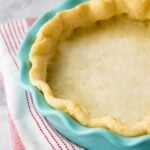
Easy Gluten-Free Pie Crust
Our new, easy gluten-free pie crust recipe combines readily accessible ingredients (a.k.a. not a ton of specialty flours) to create the perfect buttery, flaky crust.
Servings: 8 servings
Calories: 167kcal
Ingredients
- 1 ½ cups all-purpose gluten free flour (see notes about GF flours)
- ¾ teaspoon xanthan gum omit if your gluten free flour already contains it
- 2 teaspoons sugar omit if using for a savory pie
- ¼ teaspoon fine sea salt
- ½ cup unsalted butter cut into ½-inch slices
- 1 teaspoon apple cider vinegar
- ⅓ cup sour cream full fat
- 0-5 tablespoons ice water
Makes: 9inch round
Instructions
Food Processor Instructions (preferred method)
- In the basin of a food processor, combine 1 ½ cups all-purpose gluten free flour, ¾ teaspoon xanthan gum (if using), 2 teaspoons sugar, and ¼ teaspoon fine sea salt. Pulse to combine.
- Add in ½ cup unsalted butter, 1 teaspoon apple cider vinegar, and ⅓ cup sour cream. Pulse until the mixture comes together, and the butter is chopped into about pea-sized chunks.
- Grab a handful of the mixture and squeeze it together. If it forms well into a solid mass, you’re ready to move to the next step. If the mixture is still a little too crumbly, add in the ice water, a tablespoon at a time, pulsing after each addition, until it holds together in a ball when squeezed.
- Dump the mixture onto a flat surface, and form into a disc. Wrap the disc in plastic wrap, and stash in the fridge for at least 20 minutes before rolling out, or until ready to use, up to 3 days.
Mixing Bowl Instructions
- In a medium-size mixing bowl, combine the flour, xanthan gum (if using), sugar, and salt. Stir to combine.
- Add in the butter. Using two forks, a pastry blender, or your fingers, combine the butter and flour mixture until the butter is chopped into about pea-sized chunks.
- Add in the apple cider vinegar and sour cream. Stir until well combined.
- Grab a handful of the mixture and squeeze it together. If it forms well into a solid mass, you’re ready to move to the next step. If the mixture is still a little too crumbly, add in the ice water, a tablespoon at a time, stirring after each addition, until it holds together in a ball when squeezed.
- Dump the mixture onto a flat surface, and form into a disc. Wrap the disc in plastic wrap, and stash in the fridge for at least 20 minutes before rolling out, or until ready to use, up to 3 days.
To Roll Out and Bake
- After chilling time, remove the pie dough disc from the fridge, and allow to warm for 5 minutes.
- Unwrap dough and place on a floured surface, and then roll using a rolling pin until about ⅛" thick. Protip: two quarters stacked on top of each other is about ⅛"—which is an easy way to measure your pie crust thickness.
- Roll the pie crust onto the rolling pin, and then unroll onto a 9-inch pie pan. Gently push to fit the pie crust to the plate—there should be about a 1" overhang.
- Trim, flute, crimp or otherwise seal the edge of the crust. Fill with filling and bake according to pie recipe, or blind bake: To blind bake, line the crust with parchment paper or aluminum foil. Fill the pie crust with pie weights or dried beans, and then stick it in the fridge half an hour before baking it for 20 minutes in an oven preheated to 375°F. After the 20 minutes are up, remove the pie and take the weights and parchment paper out. Use a fork to prick a few holes in the crust and bake for another 15 minutes.
Notes
- We have tested this recipe with six different gluten-free flour blends:
- Our favorite option is Cup 4 Cup Multipurpose Flour—the flavor and texture were top notch, and it was easy to roll out and work with.
- Better Batter Original Blend Flour, Bob’s Red Mill 1-to-1 Baking Flour, Simple Truth All Purpose Gluten Free Flour, and King Arthur Measure for Measure all had good flavor and texture, but were slightly harder to work with. The crusts were all workable, but they crumbled easily during rolling and forming the crust and required more water to bring them together.
- Pillsbury Gluten Free All Purpose Flour Blend was very difficult to work with during rolling and forming the crust—we ended up just tossing the whole batch!
- Use full-fat sour cream for the best results.
- Freeze the dough balls for up to three months, or shape the pie crust in a foil pie plate and freeze it there.
Nutrition
Serving: 1serving | Calories: 167kcal | Carbohydrates: 18g | Protein: 3g | Fat: 10g | Saturated Fat: 6g | Polyunsaturated Fat: 0.5g | Monounsaturated Fat: 3g | Trans Fat: 0.3g | Cholesterol: 26mg | Sodium: 85mg | Potassium: 16mg | Fiber: 3g | Sugar: 2g | Vitamin A: 296IU | Vitamin C: 0.1mg | Calcium: 27mg | Iron: 1mg
